Dunning-Kruger or when confidence equals incompetence
Introduction
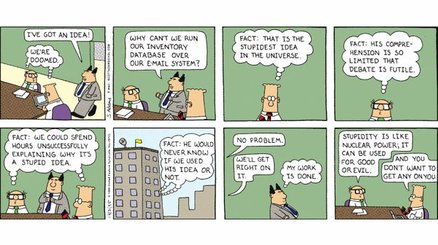
In this post, I wish to return to discussing a non-technical phenomenon. Drawing on my experience working in digital, I will introduce the Dunning-Kruger Effect and argue that understanding it is critical to our modern, fast-moving lives.
Inspired by the real-life story of a bank robber, McArthur Wheeler, who hid his face from security cameras with lemon juice because he knew lemon juice could be used as invisible ink. Naturally, this didn't work, and he was recognized and caught the same day.
This incident inspired David Dunning and Justin Kruger to write the scholarly piece "Unskilled and Unaware of It" which showed how people will fail to correctly assess their level of competence in a test, both before and after. In particular, those with the lowest skill level massively overestimated their ability, while the most skilled were too cautious.
 <h3>Unknown unknowns</h3>
There are several explanations for this. Firstly, those with the highest skill level can suffer from the Impostor syndrome, a belief that they are not as skilled as others think they are. Also, it's hard to gauge your expertise concerning others correctly. Finally, those with the lowest skill level lack the knowledge to estimate a task's complexity correctly in the first place.
Or, in the words of Dunning and Kruger, for a given task, less skilled people will:
-
fail to recognize their lack of skill
-
fail to recognize the extent of their inadequacy
-
fail to gauge the skill of others accurately
-
recognize and acknowledge their lack of skill only after training
As seen elsewhere
This concept isn't new, and examples can be found throughout philosophy, from the writings of Confucius, Plato, and Charles Darwin to Bertrand Russel and even Shakespeare.
"The Foole doth thinke he is wise, but the wiseman knowes himselfe to be a Foole" As You Like It
Here, the idea is that knowing your limits is critical to dispelling your ignorance.
A little knowledge is a dangerous thing
Clients are inherently in a position of strength and are, naturally, looking for the best value. This leaves them open to overconfidence in their demands and ignorant of limitations. Moreover, those who have contact with clients can also lack the required knowledge, often agreeing to unattainable features and deadlines.
Also, knowledge differs between people. This, combined with cognitive effects like confirmation bias, can produce widely different expectations, leading to "over-promising and under-delivering" and incorrect deliverables. This is understandable, as no one person can be a master of all things, but it's exacerbated in Digital by the ever-changing environment.
Conclusion
So, look closer next time you're dealing with someone excessively confident. Remember that confidence is a poor marker of competence. However, if you're not yet concerned, let me raise the stakes. Psychopaths are known for their confidence and ability to manipulate without empathy.
"˜One thing only I know, and that is that I know nothing'. Socrates
For those who are considered Gurus, don't despair. Be honest and humble and say you want to do more research to give the best response. Never be pushed into a rash decision; say you'll get back to them and that the best advice takes time. Finally, never delay bad news; be open and honest. We all make mistakes, and people respond well to humility.
On the other hand, we all need to remember how complex and fast-moving industries like digital are. This requires constantly investing in employee education and forcing management to re-engage with their staff. I've found that most problems are created by those who lack knowledge but hold power.
Please feel free to like, share or comment on this post and leave feedback in the comments below. Also, please check out some posts that are similar to mine.
Understanding Context Shifting
Original Article: Read on LinkedIn | Read on Substack