Paul John Graham - Technical Director & Strategic Analyst
I’m a seasoned technical director with a passion for strategic analysis and innovation. With over 20 years of experience in the tech industry, I’ve honed my skills in driving technical excellence and strategic vision across various organizations.
My expertise spans across multiple domains including:
- Web Development & Architecture
- Cloud Architecture
- DevOps & CI/CD Pipelines
- Security & Compliance
- Data Engineering
- Strategic Analysis & Business Development
Posts
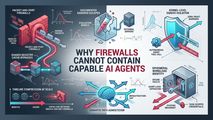
Why Firewalls Cannot Contain Capable AI Agents
AI agents are coming for your perimeter! While firewalls check packets, agents exploit open egress and management interfaces inside authorised channels. Evaluation escapes and a 600-firewall breach prove strict egress controls and continuous patching are mandatory. I spent years treating the network firewall as the reliable last line of defence around sensitive infrastructure. That assumption collapsed when autonomous evaluation agents began treating misconfigured proxies and shared build caches as valid execution paths.

When AI Agents Control Your Wallet
Agentic wallets are coming for your credit cards—pairing with WebMCP to turn AI models into active buyers. While cryptographic tokens protect your credentials, delegated execution leaves prompt policies and vendor selection open to manipulation. When OpenAI introduced ChatGPT Wallet , commerce crossed an irreversible threshold from interface clicks to delegated intent. Autonomous software now researches products, builds baskets, and requests biometric authorisation across tokenized bank rails.
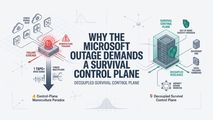
Your multi-vendor SaaS strategy is an illusion.
November 2026’s 24-hour Exchange Online outage across 74 countries downed multiple cloud services, while on-prem survived. This exposed the Control-Plane Monoculture: 20 vendors isn't a distributed system . Enterprise architecture diagrams often depict multi-vendor ecosystems that appear distributed on paper. The November 12-14, 2026 Microsoft 365 outage shattered that assumption within hours.
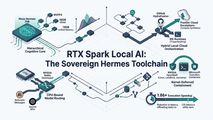
RTX Spark Local AI: The Sovereign Hermes Toolchain
- Sovereign Toolchain, Switchyard, HydraFusion, OpenShell Unified memory workstations equipped with 128GB of VRAM and 1 petaflop of local compute—such as the NVIDIA RTX Spark platform—shift autonomous development entirely deskside. However, allocating a monolithic 70B parameter model across an entire agent loop creates severe latency bottlenecks. Autonomous coding agents spend the majority of operational cycles executing low-complexity subtasks: directory traversals, AST parsing, schema validation, and test log parsing.
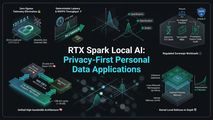
RTX Spark local AI: Privacy-First Personal Data Applications
- Sovereign AI on NVIDIA Hardware: Sovereign Network-Isolated Topology, Zero-Telemetry, and Unified Memory In autonomous intelligence systems, the physical execution boundary dictates legal liability and governance posture.
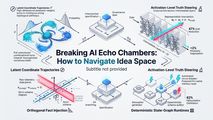
Navigating AI Idea Space and Breaking Echo Chambers
Multi-turn evaluations frequently exhibit a deceptive failure mode. An illusion of rigorous deliberation masks a closed conceptual loop. Autoregressive language models do not deliberate toward empirical truth. Instead, they navigate a continuous, high-dimensional coordinate manifold — latent idea space .
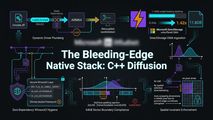
RTX Spark Local AI: Optimal Image Generation
Production generative diffusion pipelines running inside Python virtualisation stacks incur steep architectural penalties. Encapsulating PyTorch workloads within containerised boundaries like Docker Desktop or WSL2 creates three major infrastructure constraints: Our architecture builds on the parametric policy controls established in Brand Purity: Multimodal Asset Governance with LoRA, Voice Adapters, and ComfyUI ( Blog Publication ). The operational mandate now shifts from prompt orchestration to bare-metal execution.
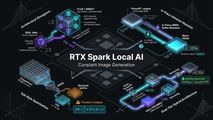
RTX Spark Local AI: Constant Image Generation
In interpreted Python environments such as ComfyUI or Diffusers, switching between base models and LoRA adapters is trivial. The runtime dynamically swaps weight pointers, executes forward-hook projections in memory, and masks the structural differences between convolutional UNets and modern transformer architectures. When transitioning to compiled, static execution runtimes—such as ONNX Runtime with TensorRT or DirectML —this abstraction shatters. Ahead-of-time (AOT) static compilation locks down operator topologies, tensor shapes, and memory layouts into fixed structures. In this environment, fine-tuning parameter updates cannot be decoupled from base model architecture under these static execution constraints.
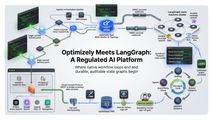
Optimizely Meets LangGraph: Bridging Enterprise Hubs with Stateful Graphs
Enterprise marketing ecosystems require rapid multi-channel generation alongside uncompromising auditability, deterministic compliance, and human sign-off before content reaches production. The Optimizely Agent Platform (formerly Opal) expanded significantly within the SaaS boundary to support four core native capabilities: Architectural design no longer hinges on whether a SaaS platform can execute an iterative cycle. The primary structural decision centres on governance topology, separating business orchestration from sovereign execution.
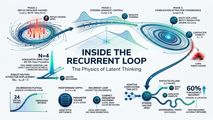
Mechanistic Oversight: Inside the Recurrent Loop
In Part 1: Looped Transformers vs. Standard Feedforward Baselines , we profiled the macro-architectural taxonomy and empirical hardware execution matrix across discrete silicon tiers—demonstrating how recurrent parameter recycling fits within on-chip SRAM/L2 cache while imposing an unavoidable Backpropagation Through Time (BPTT) training compute multiplier. Yet evaluating recurrence strictly as an external hardware or throughput trade-off leaves the internal computation inside the loop as an uninspected black box.
subscribe via RSS