Majorana, Microsoft, and Quantum Computers
Introduction
Have you ever wondered if quantum computers will replace your laptop? 🤔 Imagine solving problems in minutes that'd take today's supercomputers millennia! That's the buzz around Microsoft's latest breakthrough, Majorana 1. But will it change your daily life? Let's dive in.
The Breakthrough: Microsoft's Majorana 1 💡
What is Majorana 1?
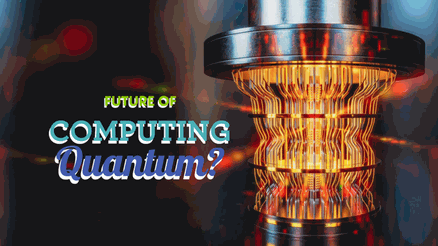
Microsoft has unveiled Majorana 1, a new chip that represents a big step in its 20-year journey into quantum computing. It's not just a small upgrade; it's potentially a game-changer. You can find more information on Microsoft's Quantum Computing website.
The Unique Science Behind It ✨
Majorana fermions are like the superheroes of the quantum world. They're particles that are their antiparticles---pretty cool, right? Microsoft uses these to create more stable qubits, the building blocks of quantum computers.
The Potential: Real-World Applications 🌍
How Will We Use Them? 🧠
-
Drug Discovery: Speeding up molecular simulations for new medicines and faster medicine development.
-
Climate Modeling: Predicting weather with incredible accuracy and better climate change research.
-
Financial Modeling: Optimizing complex portfolios in real-time and enhanced investment strategies.
-
Artificial Intelligence: Boosting AI models to revolutionize machine learning and create new and improved AI applications.
The Reality Check: Limitations and Challenges
What Quantum Computers Won't Be Good At 💻
Don't expect quantum computers to handle everyday tasks like browsing or word processing. Classical computers are still the best for those. Plus, quantum computers will be pricey and need super-cold temperatures to work.
When Will They Be Useful? ⏳
Quantum computers won't replace your desktop, but they'll be powerful for complex problems and work with classical systems. Keep an eye on this space!
Where Will They Reside? 🏢
Think of research labs and big corporations with access to cloud platforms, like IBM's Quantum Experience.
Challenges in Commercializing Majorana 1 🚧
-
Scaling Up Qubits: Getting to millions of qubits is tough.
-
Production Complexity: Making those topoconductors is tricky.
-
Cost and Infrastructure: Super-cold temperatures and complex setups are expensive.
-
User Adoption: Initially for researchers and big companies.
The Wider Landscape: Competitors and Criticisms
Criticisms of Microsoft's Approach 🧠
Microsoft's pursuit of topological qubits using Majoranas faces challenges such as experimental difficulties in creating stable qubits based on these particles compared to other technologies like superconducting or trapped ions used by competitors such as IBM or Google respectively (IBM Research Blog). Additionally, there have been concerns about transparency regarding progress updates compared to other companies which openly share milestones achieved during development processes(Google AI Blog).
Beyond Microsoft: Other Key Players 🌐
-
IBM: Superconducting qubits and cloud access.
-
Google: Quantum supremacy with its Sycamore processor.
-
IonQ: Trapped ion tech and partnerships with cloud providers.
-
D-Wave: Quantum annealing for optimization.
-
Rigetti Computing: Superconducting processors and cloud access.
-
Amazon (AWS): Access to various quantum computers.
Conclusion
Quantum computers won't replace your desktop but will be powerful tools for specific complex problems, working hand-in-hand with classical systems.
Further Reading
-
Microsoft Quantum Computing: https://quantum.microsoft/
-
IBM Quantum Experience: https://www.ibm.com/quantum
-
IBM Research Blog: https://research.ibm.com/blog
-
Google AI Blog: https://ai.googleblog.com/
-
Rigetti Computing: https://www.rigetti.com/
Original Article: Read on LinkedIn | Read on Substack