The Indie Creator's 2026 Survival Guide: AI Laws & the No FAKES Act
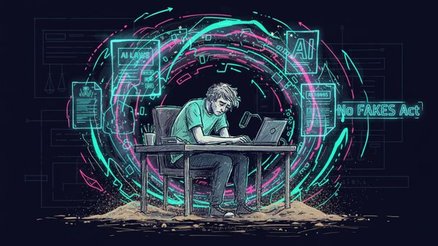
Introduction
Is your creative business built on durable legal foundations? Early experimentation with generative tooling operated in a regulatory vacuum. In 2026, the regulatory framework has matured, establishing clear statutory rules for copyright eligibility, training data transparency, and digital likeness rights.
This guide outlines the legal requirements for independent creators and studio teams. Courts and copyright offices have established firm boundaries on what constitutes human authorship, what constitutes infringing data scraping, and how statutory liability attaches to synthetic likenesses.
The Regulatory Baseline
Verify then Create: The era of consequence-free data scraping ended with landmark rulings like Thomson Reuters vs. Ross Intelligence. Commercial workflows require auditable provenance and verified training data.
If your workflow relies on models trained on unlicensed corpora, your downstream deliverables lack clear title—leaving assets vulnerable to takedowns and ineligible for federal copyright registration.
Key Ownership Standards
The Authorship Requirement: The U.S. Copyright Office (USCO) maintains a consistent rule: "No human author equals no copyright". Registering creative assets requires demonstrating substantial human creative intervention.
Understanding Ownership Tiers
-
100% Raw Prompting: Text prompt inputs only. Result: Public Domain (No statutory copyright).
-
AI + Basic Editing: Colour correction, global adjustments. Result: Partial Protection (Selection and arrangement only).
-
Human-in-the-Loop: Repainting, custom compositing, original sequential layout. Result: Full Copyright (Requiring formal AI disclosure).
Compliance Requirements
Complying with the No FAKES Act: The No FAKES Act establishes an individual's "digital replication right" across their lifetime plus 70 years. The statute applies strict liability: if an AI-generated asset is readily identifiable as a real person without written consent, creators and platforms face statutory penalties up to $750,000 per violation.
For the indie creator, this creates a massive risk when using "remix" communities or LoRAs that inadvertently mimic a celebrity's specific look or voice. As discussed in Censorship Techniques in LLMs, platforms have responded by implementing strict filters and "Model Summaries" to verify that the AI models used were not trained to replicate specific human likenesses.
Your Compliance Checklist:
-
Audit Your Models: Ensure your AI tools use licensed training data to avoid "legal sand." (Check Hugging Face's Transparency Tools for model origins).
-
Enable C2PA: Embed provenance metadata in every exported file to prove human authorship.
-
Manual Toggle: Manually opt out of AI training on platforms like Meta and LinkedIn to prevent your art from being scraped.
-
Document Your Process: Keep "work-in-progress" layers and sketches to prove human intervention for USCO claims.
-
Likeness Check: Utilise "Deepfake Insurance" products to protect against No FAKES Act lawsuits.
Conclusion
The Path Ahead: The 2026 landscape isn't about stopping AI; it's about professionalising its use. Understanding these rules is the first step toward building a brand that lasts.
What's Next? In our follow-up article, "The Indie Creator's 2026 Survival Guide: The Comic Creator Blueprint," we will move from theory to practice. We will explore how to apply these laws specifically within tools like comicbook-creator, discussing multi-model workflows, mixed copyright for graphic novels, and how to draft a "Human-in-the-Loop" disclosure that actually sticks.
💬 How are you approaching copyright issues with creative work? Share your insights below and ♻️ share this post with your creative network!
Further Reading & Resources
-
US Copyright Office: AI Registration Guidance: The official portal for federal regulations and how disclose AI-generated content.
-
WIPO Guide on Generative AI and Intellectual Property: A comprehensive global checklist for managing AI risks.
-
USCO Report: Copyright and Artificial Intelligence (2025): The definitive stance on human authorship and AI output.
-
EU AI Act: Guidance for Creators: Understanding transparency and marking requirements in Europe.
More from me
Original Article: Read on LinkedIn | Read on Substack