The Indie Creator's 2026 Survival Guide: My Comic Creator Blueprint
Introduction
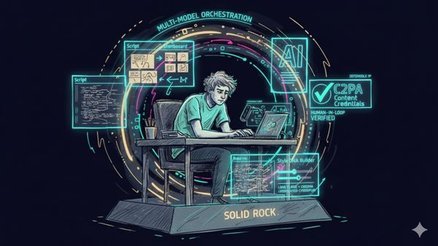
If Part 1 (AI Laws & the No FAKES Act) established the "Legal Sand" of 2026, Part 2 is your blueprint for building on solid rock. For users of comicbook-creator, the challenge isn't just generating an image or story; it is ensuring that your final graphic novel is a defensible, copyrightable asset.
In this era, "ownership" is no longer binary. It is a spectrum of human-directed decisions. To secure your IP against clones and unauthorized merchandise, you must master the transition from a "prompt engineer" to a Creative Director of multi-model workflows.
The Multi-Model Orchestration: Your "Chain of Command"
The U.S. Copyright Office (USCO) has clarified that "sweat of the brow" or complex text prompts do not constitute authorship. A defensible workflow creates a paper trail of human decision-making that is far more likely to be granted full protection:
-
The Script: Use an LLM for initial ideas but perform substantial manual rewriting to ensure 100% human-authored status.
-
The Storyboard: Use AI to generate "sketches" before manually adjusting compositions, camera angles, and character blocking.
-
The Final Render: Utilize specialized AI Image Models to apply style, followed by heavy manual intervention.
-
Manual Intervention: Between each stage, you must show manual editing (overpainting, masking, or structural adjustment) to prove you directed the "expressive elements."
Defensive Prompting: Styles and Genres, Not Artists
In 2026, the safest way to cover yourself against copyright claims is to avoid prompting the names of living artists or specific studios. Decompose an aesthetic into its technical components to stay "Clean Room" safe:
-
Genre Descriptors: Use terms like "Cyberpunk" or "Film Noir" to establish the foundational mood without infringing on individual IP.
-
Technical Mediums: Specify "Cinecolor," "Chiaroscuro lighting," or "Ligne Claire linework" to define the visual physics of your world.
-
Style DNA: Describe the lighting, brush texture, and camera lens to create a unique visual language that belongs to you.
-
Risk Mitigation: Avoiding living creator names shields you from "intent to infringe" flags and the No FAKES Act.
The "Mixed Copyright" Dilemma and Disclosure
A typical scenario for a comicbook-creator user is a "Mixed Copyright" work where the story is human but images are AI-assisted.
-
Independent Protection: Your human-written script remains fully protected as a literary work.
-
Compilation Copyright: You gain protection for the book as a whole by selecting and arranging images in a specific sequence to tell a unique story.
-
Specific Disclosure: Your filing should state that visual assets underwent substantial modification, such as manual digital overpainting to correct errors.
-
Rights Shielding: Explicitly stating that no names of living artists were used in the generative process further protects your "Right of Publicity."
Implementation: C2PA and Hallucination Audits
To prove you are a "Human-in-the-Loop," you must move beyond simple output and embrace verification standards:
-
Content Credentials: Utilize C2PA standards to embed a digital nutrition label in your metadata that records every edit.
-
Hallucination Audit: Manually correct visual inconsistencies, such as extra limbs or nonsensical shadows, to provide a high-value expressive act.
-
Character Continuity: Fix shifts in eye color or facial features to prove you are the one enforcing the logic of the world.
-
Tamper-Evident History: Metadata provides a clear history of your creative process from initial AI generation to final manual brushstrokes.
International Strategy & The Berne Convention
Filing for copyright in a different country first is a common but risky tactic in the global market:
-
The Berne Convention: This ensures that copyright granted in one country is recognized in others, but registration rules still vary.
-
US Registration: To pursue statutory damages in US courts, you generally need a US registration regardless of international status.
-
Evidence Maintenance: Always maintain a dated project log and version control history as evidence for any jurisdiction.
-
Compliance Duty: Stay updated with the US Copyright Office AI Guidance to ensure your disclosure duties are met.
Conclusion
Building a defensible comic in 2026 requires moving beyond simple prompts to a verifiable, human-led orchestration. By integrating multi-model workflows with technical "Style DNA" and C2PA metadata, you transform raw AI outputs into a unique, copyrightable asset.
This strategic shift ensures your intellectual property stands on "solid rock" against the shifting sands of global regulation and algorithmic clones. Ultimately, your role as Creative Director is the most powerful tool for securing your artistic legacy in the age of automation.
💬 How are you turning technical "hurdles" into your signature artistic style? Share your insights below and ♻️ share this post with your creative network!
Further Reading
-
WIPO Summary: The Berne Convention: Essential reading on how your moral and economic rights are protected across international borders.
-
UK Government: Copyright and AI Statement of Progress (2026): UK's 2026 reporting requirements for AI developers and creators under the Data (Use and Access) Act.
-
EU AI Act: Article 50 Transparency Obligations: Legal text detailing why creators in the EU must mark synthetic content (deepfakes or AI-assisted art).
-
DACS: Protecting Artists' Rights in the AI Age: Insights from the UK's leading visual artists' rights organization on how to advocate for consent, control, and compensation.
More From Me
Original Article: Read on LinkedIn | Read on Substack