Strategic Clarity: Why, What, How for Technical Leaders
Introduction
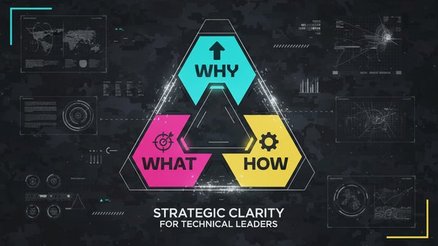
Connecting technical execution with strategic intent is critical in environments characterized by rapid technological advancement:
- Strategic Alignment: Rapid iteration and complex architectures frequently risk decoupling execution from underlying business goals, as explored in Agile software development.
- Purpose Over Features: The "Why, What, How" framework, popularized by Simon Sinek, provides a disciplined model to navigate complexity by shifting focus from raw features to core purpose.
- Investment Guidance: Aligning technology initiatives with organizational mission ensures engineering capacity contributes to meaningful objectives, giving leaders a clear framework to guide architectural investments.
The "Why": Purpose and Vision in Technical Leadership
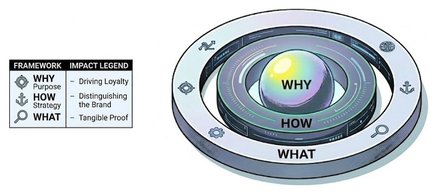
The "Why" defines the foundational purpose driving technological endeavors, moving beyond simple feature delivery into an architectural vision:
- User Empowerment: Designing frictionless interfaces that simplify complex operational workflows.
- Scalable Resilience: Architecting distributed systems that sustain rapid organizational growth without compromising availability.
- Shared Mission: Articulating a clear purpose aligns engineering teams and focuses technical innovation on measurable business value.
- Debt Prevention: Anchoring roadmaps in strategic intent ensures engineering investments solve domain challenges rather than accumulating unnecessary technical debt.
- Cognitive Buy-in: Communicating purpose engages the limbic system, the neural center governing trust and core decision-making, as outlined in Simon Sinek's talk How Great Leaders Inspire Action.
The "How": Engineering Principles and Methodologies
The "How" defines the methodologies, architectural patterns, and quality gates used to realize the overarching vision:
- Architectural Patterns: Adopting Domain-Driven Design (DDD) and structured architectural patterns to establish clean service boundaries across complex domains.
- Delivery Pipelines: Implementing robust continuous delivery and automation practices, following principles from Martin Fowler's The New Methodology.
- Quality Standards: Applying practices from Extreme Programming and cloud-native computing to establish rigorous testing protocols and reproducible builds, tracking evolving capabilities via the ThoughtWorks Technology Radar.
- Operational Guardrails: Establishing clear engineering standards gives squads autonomy while ensuring technical decisions remain consistent across distributed teams.
The "What": Tangible Outcomes and Technological Solutions
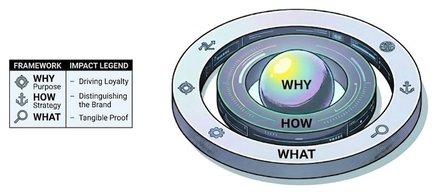
The "What" represents concrete software deliverables, infrastructure components, and client-facing interfaces:
- Core Deliverables: Production software applications, infrastructure deployments, microservice APIs, and data pipelines.
- Strategic Alignment: Deliverables must directly reflect the underlying "Why" and execute through the defined "How"—avoiding the operational disconnect where complex systems fail to serve business objectives.
- Outcome Measurement: Evaluating project success extends beyond delivery milestones to business metrics like latency reduction, reliability, and user adoption.
- Rational Validation: Tangible deliverables engage the neocortex, providing empirical data and analytical justification for architectural decisions.
Implementing the Framework for Technical Leadership
Embedding the "Why, What, How" framework across an engineering organization requires four practical steps:
- Articulate Domain Purpose: Translate business objectives into a coherent architectural vision that connects engineering priorities to company goals.
- Define Engineering Principles: Document explicit architectural patterns, quality standards, and delivery mechanisms to guide day-to-day decisions.
- Validate Project Scope: Verify that every RFC, roadmap initiative, and major refactoring effort directly supports the documented purpose.
- Maintain Transparent Cadence: Reinforce strategic context through architecture reviews, tech talks, and engineering retrospectives to sustain team alignment.
Conclusion & Strategic Advice
The "Why, What, How" framework provides a practical compass for engineering leadership. Grounding technical methodology in strategic intent ensures engineering capacity produces enduring business value rather than architectural friction.
Further Reading
- McKinsey: Seven Lessons on How Technology Transformations Can Deliver Value
- Harvard Business Review: The Business Case for Purpose
- ThoughtWorks Technology Radar
More From Me
Original Article: Read on LinkedIn | Read on Substack