Access as Accessibility: Resilient Multi-Channel Delivery Beyond the Smartphone
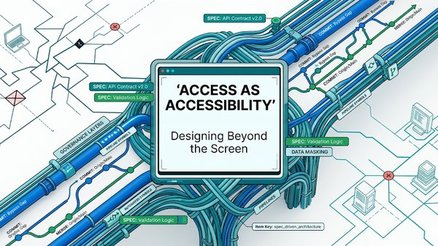
Part 3 of 4
Introduction
The technology sector defaults to constructing iOS or Android applications, implicitly assuming end-users possess premium hardware and continuous high-speed data streams. Genuine digital equity dictates decoupling core service delivery from the smartphone screen. Building on the architectural paradigms established in Part 2 of the "Access as Accessibility" series, this guide outlines the strategic deployment of hardware-agnostic communication fail-safes through three distinct execution layers:
- Web-Only Consolidation Bypass : Orchestrating SMS, Unstructured Supplementary Service Data (USSD) , Interactive Voice Response (IVR) , and physical touchpoints to engineer operational resilience.
- Edge-Legacy Synthesis : Overlaying cutting-edge computing capabilities—such as Edge AI , localised large language models , and zero-trust protocols —directly onto legacy and physical channels.
- Modern Demands Scaling : Securing these older pathways to ensure critical infrastructure remains accessible to demographics facing data poverty, digital illiteracy, or hardware limitations.
The Terminal Control Fallacy
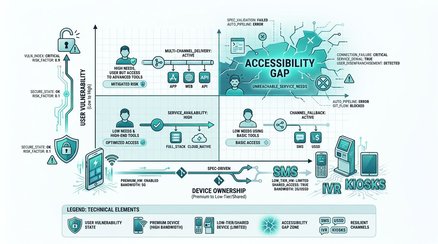
When product teams dictate end-user device capabilities, it creates a critical architectural blind spot that becomes clear during operational workflows with organisations. High-need demographics complete tasks on shared family computers, library terminals, or older mobile devices. Structuring operations under the assumption that endpoint hardware is an unreliable, unmanaged variable requires mitigating two specific design flaws:
- Hardware Disenfranchisement : Designing digital ecosystems that require modern operating systems or constant data-stream filters out users who require essential support.
- Terminal Control Acceptance : Building resilient services requires recognising the terminal control fallacy as a baseline operational constraint.
SMS and USSD as Universal Interfaces
Basic cellular protocols bypass standard broadband requirements to combat data poverty through three operational mechanisms:
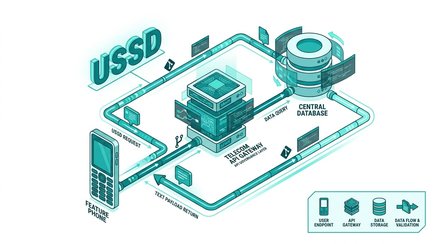
- USSD Independence : USSD operates independently of mobile data, allowing users to query remote databases via simple text-based menus (e.g., dialling *123#).
- Terminal Conversion : Running on basic feature phones in poor signal conditions effectively turns any active cellular connection into a terminal.
- Historical Foundation : Kenya's M-Pesa established the baseline for bypassing traditional banking infrastructure via SMS and USSD.
Modern execution demands upgrading these two-decade-old touchstones with current cryptographic standards across three distinct implementation phases:
- Contemporary Frameworks : India's UPI 123PAY engineers offline-capable digital inclusion, allowing feature phone users to execute secure digital payments via IVR and USSD without internet access.
- Tokenised Execution : This system demonstrates modern cryptographic tokenisation applied over legacy text and audio channels.
- Architectural Mitigation : Securing unencrypted payloads traversing historically compromised SS7 networks requires stringently sanitising telecom-layer vulnerabilities, extending beyond a standard API gateway .
Interactive Kiosks and Community Hubs
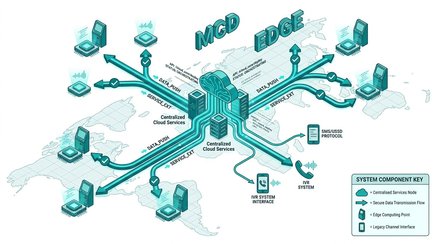
Centralised cloud services require a physical bridge for individuals restricted by geographic divides or low digital literacy. Aligning digital deployment with community spaces establishes a network of assisted-digital hubs through four primary infrastructure expansions:
- Physical Fail-safes : India's BharatNet Project extends high-speed optical fibre backbones across 250,000 village councils, relying on localised kiosks and common service centres for operational success.
- Edge Computing Deployment : Modern architectures require configuring these community hubs as fully-fledged Edge Computing nodes to handle local data processing.
- Zero-Trust Authentication : Local processing enables hubs to execute biometric authentication via local biometric hashing and securely cache user requests during regional internet blackouts.
- Offline-First Synchronisation : This data synchronisation ensures operational resilience by processing workflows securely when severed from the cloud.
Interactive Voice Response (IVR) Systems
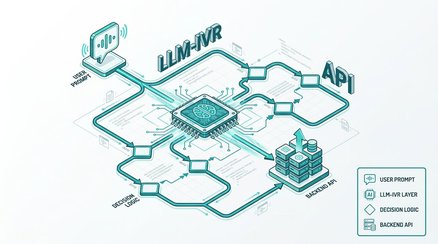
Structured voice channels remain the most accessible medium for older demographics and individuals with visual impairments. Modernising telephone-based IVR trees requires bypassing generic natural language processing (NLP) and high-bandwidth cloud APIs through three specific integrations:
- Localised AI Deployment : Organisations mandate the deployment of low-latency, localised, small-parameter Large Language Models (LLMs) tailored specifically for dynamic, multilingual semantic routing.
- Latency Reduction : This integration directly reduces the latency and error rates associated with legacy voice trees.
- Plain Language Resolution : Localised AI voice processing translates user requests into plain language to resolve complex account queries immediately.
Shared-Device Safety
Protecting subsequent users from intercepting private data on shared family phones or public library hardware requires implementing two rigorous session management protocols:
- Memory Eradication : Engineering specifications require the deployment of automatic session timeouts and explicit "exit-and-clear" sequences to wipe browser memory after each interaction aggressively.
- Interface Redaction : Integrating data masking at the interface level ensures immediate redaction of sensitive banking details or health queries, preventing visible caching on public screens.
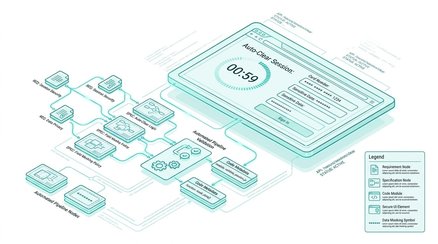
Visual Suggestion: A UI wireframe of a public terminal interface, specifically emphasising an "Auto-Clear Session" countdown timer and data-masked text fields for sensitive information.
Conclusion & Strategic Advice
Engineering an inclusive ecosystem demands accepting specific architectural trade-offs to manage multiple distinct communication channels. Infrastructure complexity, cross-platform training, and ongoing support overhead are significantly higher than in consolidated web-only setups. Routing vulnerable demographics through unencrypted legacy protocols requires integrating three concrete cryptographic methodologies into modern DevOps workflows:
- Gateway Sanitisation : Deploying payload masking directly at the telecom gateway layer to protect data traversing vulnerable SS7 networks.
- Tokenisation Protocols : Implementing modern session tokenisation to secure basic text channels like SMS and USSD.
- Out-of-Band Verification : Executing time-based, out-of-band transaction approvals to validate user requests securely.
Combining modern security with legacy channels protects against internet outages and hardware deprecation. Executing this operational imperative relies on the following three-tier channel selection matrix:
- Data Poverty/Low Signal : Implement SMS/USSD API gateways secured via tokenised payloads.
- Low Digital/Visual Literacy : Prioritise localised LLM-driven IVR systems for semantic routing.
- Complex Transactions/No Hardware : Deploy assisted-digital edge-computing community kiosks.
The next instalment in this series explores the metrics of multi-channel success in Access as Accessibility: Measuring Real Channel Reach – Framework for an Accessibility Audit. We audit touchpoints, validate fail-safes, and secure infrastructure to ensure services run reliably for every terminal class.
💬 What strategies is your team using to ensure critical infrastructure remains accessible to everyone? Drop your thoughts in the comments and ♻️ share this post with your network to spread awareness!
Further Reading
- GSMA: Mobile Money and USSD Infrastructure
- Twilio: Best Practices for Designing IVR Systems
- Building USSD Applications with Africa's Talking
More From Me
Original Article: Read on LinkedIn | Read on Substack