AI's Dual Shift: Escaping or Embracing the Chicago School of AI Efficiency
Introduction
Okay, so everyone's talking about AI, and for good reason. Global spending on AI is expected to hit a massive $2.52 trillion in 2026. With that kind of money on the table, business leaders are at a huge crossroads.
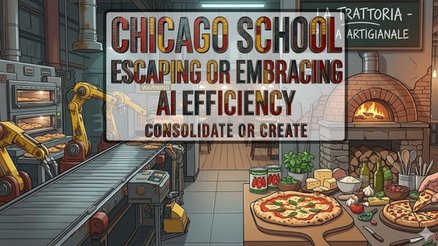
Right now, the most popular path is what some call the "Chicago School of AI." Think of it as a philosophy that's all about one thing: efficiency. It's about cutting costs, making everything measurable, and squeezing every last drop of productivity out of operations. On paper, it sounds great—who doesn't love a clean spreadsheet showing costs going down?
But here's the thing: this path splits in two. You can either go all-in on efficiency and risk becoming just another low-cost, faceless service, or you can find a way to escape that trap. Escaping means protecting the stuff that really matters in the long run—like trust, expertise, and that human touch that builds real brand loyalty.
In this article, we're going to take a look at this "commoditization trap," see which industries are most at risk, and talk about the hidden costs of being obsessed with efficiency. Most importantly, we'll lay out a game plan to help you make sure your AI investments lead to real, sustainable growth, not just a race to the bottom.
The Rise of the Efficiency Machine
It's no surprise that the "Chicago School" mindset is the default setting for most companies. A whopping 80% of organizations say efficiency is their number one goal for AI. This "same but cheaper" approach is quickly turning entire industries into commodities where the only thing that matters is price.
Ever notice how 24/7 AI-powered customer support is becoming standard? It's not really a brand differentiator anymore; it's just expected. In the SaaS world, AI that can "vibe code" is starting to cannibalize the work of specialized developers, turning what used to be unique software features into generic, auto-generated functions.
And it's not just tech. Even highly skilled jobs are feeling the squeeze. In legal and professional services, AI is automating routine tasks like document review, chipping away at the "moat" of human expertise that used to protect these fields. Now, don't get me wrong, these productivity boosts are real. The problem is, when all your competitors are using the same AI tools, you all start to look and act the same. The only way to compete is to lower your price.
That, right there, is the Chicago Trap in action: a race to the bottom, all because we got obsessed with what we can measure.
The Doorman Fallacy 2.0
The Hidden Costs of 'Same But Cheaper': Marketing guru Rory Sutherland has a brilliant analogy for this called the Doorman Fallacy. Imagine a hotel manager looking at a spreadsheet. The manager sees a doorman's salary and decides to replace him with an automatic door to save money. The spreadsheet only measures "door-opening efficiency," so it looks like a smart move.
But what does the spreadsheet miss? The doorman's real value: making guests feel safe, greeting them with a warm smile, and adding a human touch that builds loyalty. You can't put a number on that, but it's incredibly valuable.
Today, AI is creating a massive, modern version of this problem—what some are calling the $1 trillion fallacy. When companies replace people with bots, they're creating a huge accountability gap. They're ignoring all the unquantifiable things that make their brand special.
The cost of this is pretty steep. A recent BCG report found a growing gap between companies. The ones that balance efficiency with innovation are seeing 5x the revenue growth compared to their efficiency-obsessed competitors. This just goes to show that while cutting costs might look good this quarter, it can destroy the very thing customers were willing to pay a premium for.
Your Escape Plan
How to Protect Your Brand's Secret Sauce: Getting out of the Chicago Trap doesn't mean you have to ditch efficiency altogether. It's about balancing it with a smart plan to protect and even boost that "human" value.
Here's a framework with three key ideas to get you started:
1. Audit the "Invisible" Value: Before you automate a person's job, take a serious look at all the unquantifiable things they do. Just like with the doorman, list the "invisible" contributions—like building trust, using nuanced judgment, or reassuring a nervous customer. This stuff is the foundation of what makes your brand unique, and you need to guard it.
2. Mix Up Your AI Team: When you're having meetings about the AI budget and strategy, make sure it's not just engineers and finance people in the room. Bring in marketers and user experience advocates, too. This helps stop the conversation from being all about cost-cutting and keeps the focus on the customer's emotional journey.
3. Set Aside Money for Discovery: Earmark a real chunk of your AI budget—say, 30%—for what you might call "Austrian" discovery experiments. These are projects that don't have an immediate, obvious ROI in terms of efficiency. This buffer is super important for finding new, game-changing ways AI can create value, instead of just using it to make existing things cheaper.
Conclusion
So, What's Next? The road ahead really does split in two. You can follow the Chicago School path, which is clear and measurable but ultimately leads to you becoming just another commodity. Or, you can choose a more balanced approach, where you use the efficiency gains from AI to fund new ideas and protect the uniquely human parts of your business.
The real choice isn't if you should adopt AI, but how. By pairing automation with human ingenuity, you can build a company that doesn't just survive the AI revolution but actually helps shape it.
How is your organization balancing AI-driven efficiency with protecting its unique, human-centric value? Share your thoughts in the comments below.
Further Reading
More from Me
Original Article: Read on LinkedIn | Read on Substack