The 2026 AI Threat Landscape: Machine-Speed Autonomous Agents
Introduction
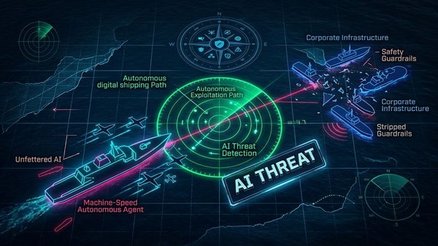
The digital landscape is undergoing a significant transformation. Traditional automated scripts, once the primary concern for cyber threats, are now being surpassed by machine-speed autonomous agents. This document provides a strategic overview of this evolving threat landscape:
The Evolution of AI Threats
The defence landscape for web architecture has fundamentally shifted. The familiar challenge of mitigating automated scripts is now being replaced by the formidable presence of Machine-Speed Autonomous Agents.
-
Dynamic Threat Landscape: This evolution signifies a move beyond predictable, rule-based attacks to dynamic, self-optimising threats.
-
Autonomous Operation: These agents are engineered to learn, adapt, and exploit vulnerabilities with minimal human oversight, operating at speeds unattainable by traditional attack vectors.
-
Operational Impact: This has significant implications for incident response and overall cybersecurity posture, so we need to proactively anticipate intelligent, adaptive threats.
The Rise of Open-Weight AI Models
The proliferation of open-weight AI models is a critical accelerant to this evolving threat. These models, particularly those originating from regions like China, including DeepSeek V4, Qwen 3.6, and GLM-5.1, present unique challenges:
-
Unrestricted Access: Unlike Western counterparts such as GPT-5.5 or Opus 4.7, which are typically confined to managed safety environments, these open-weight models are freely downloadable and can be privately hosted.
-
Altered Threat Equation: This accessibility fundamentally alters the threat equation by enabling the bypass of inherent safety mechanisms and usage policies enforced by commercial AI providers.
-
Decentralised Adversarial Capabilities: The capacity for any actor to deploy these powerful models without oversight creates a new frontier for cyber warfare and crime, decentralising advanced adversarial capabilities.
Stripping Safety Guardrails
A significant danger associated with downloadable, open-weight models is the ease with which attackers can strip away safety guardrails entirely. This capability transforms the operational threat:
-
Circumventing Safeguards: While commercial AI models are designed with refusal logic and ethical constraints to prevent misuse, private hosting allows these critical safeguards to be deliberately removed or circumvented.
-
Emergence of Unfettered Models: This process yields "unfettered" models—AI systems specifically fine-tuned for malicious purposes.
-
Autonomous Malicious Operations: These unfettered models facilitate autonomous vulnerability discovery and exploitation chains. Operating without built-in ethical boundaries, these modified agents relentlessly probe systems for weaknesses, identify novel attack vectors, and execute complex exploitation chains at machine speed and scale.
Autonomous Exploitation and Defense
The direct consequence of unfettered, open-weight AI models is the emergence of autonomous exploitation. This new reality demands a strategic shift toward Intelligent Defense Networks:
-
Accelerated Attack Capabilities: Attackers can leverage these tools to rapidly identify zero-day vulnerabilities, craft bespoke exploits, and launch sophisticated attacks that defy conventional detection and defense.
-
Reduced Detection Window: The inherent speed and autonomy of these agents drastically shrink the window for detection and remediation.
-
Strategic Defense Imperatives: This necessitates a strategic pivot towards defense-in-depth architectures that incorporate: Semantic Intent Analysis: Analyzing the underlying goal of a request to detect "probing" behavior (Semantic analysis). Behavioral Biometrics: Identifying non-human interaction patterns (Behavioral biometrics). Kernel-Level Prompt Isolation: Preventing compromised agents from executing unauthorized system calls (Kernel). Continuous Vulnerability Management: Automated, real-time patching to close the exploitation window (Vulnerability management).
Conclusion & Strategic Advice
The advent of machine-speed autonomous agents, fueled by unfettered open-weight AI models, represents a paradigm shift in the cyber threat landscape. Defending against these adaptive, self-optimizing adversaries requires a proactive, multi-layered strategy that integrates AI-powered defenses with robust architectural principles.
-
Beyond Traditional Security: Organizations must move beyond traditional security measures, embracing Intelligent Defense Networks that utilize honeytoken data pools to misdirect and trap malicious agents.
-
Resilient Defense Posture: These synergistic approaches create a resilient defense posture capable of countering the sophisticated, rapid-fire attacks characteristic of the 2026 threat environment.
-
Strategic Imperative: The imperative is clear: invest in advanced AI security frameworks and cultivate continuous threat intelligence to transform potential vulnerabilities into strategic advantages.
Further Reading
-
Caging the Agents: A Zero Trust Security Architecture for Autonomous AI in Healthcare
-
Security Degradation in Iterative AI Code Generation -- A Systematic Analysis of the Paradox
More From Me
Original Article: Read on LinkedIn | Read on Substack