GPU Liquidation Cycle: Buying Smart Amid the AI Bust
Introduction
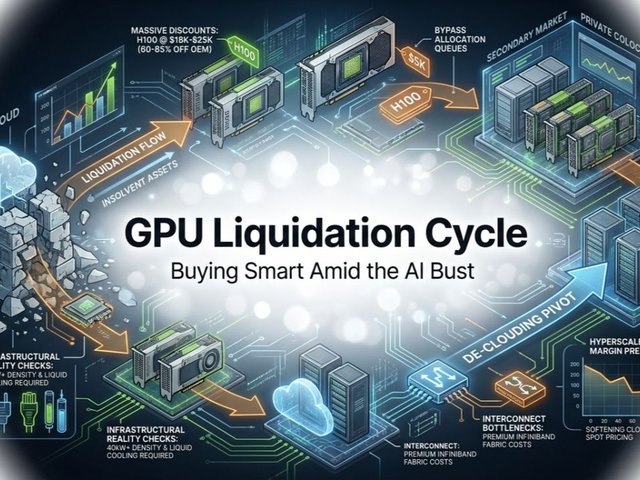
The Generative AI boom triggered aggressive hardware hoarding. However, subsequent market consolidation is releasing substantial secondary inventory into enterprise supply chains.
Mid-tier foundation model startups and debt-burdened neoclouds are offloading homogeneous H100 clusters to satisfy creditors. Simultaneously, generational architectural transitions (such as Blackwell and Rubin) are displacing earlier compute tiers.
These intersecting trends create a liquid secondary market for enterprise AI Accelerators at meaningful discounts.
However, the lower energy efficiency of H100 silicon compared to newer architectures alters the long-term colocation operational expenditure (OpEx) calculation. Navigating cloud costs requires evaluating the trade-offs between managed hyperscaler pricing and private colocation.
For many engineering teams, the strategy focuses on repatriation: migrating stable Inference and Fine-Tuning workloads back to dedicated hardware.
The Startup Squeeze: Market Rationalisation
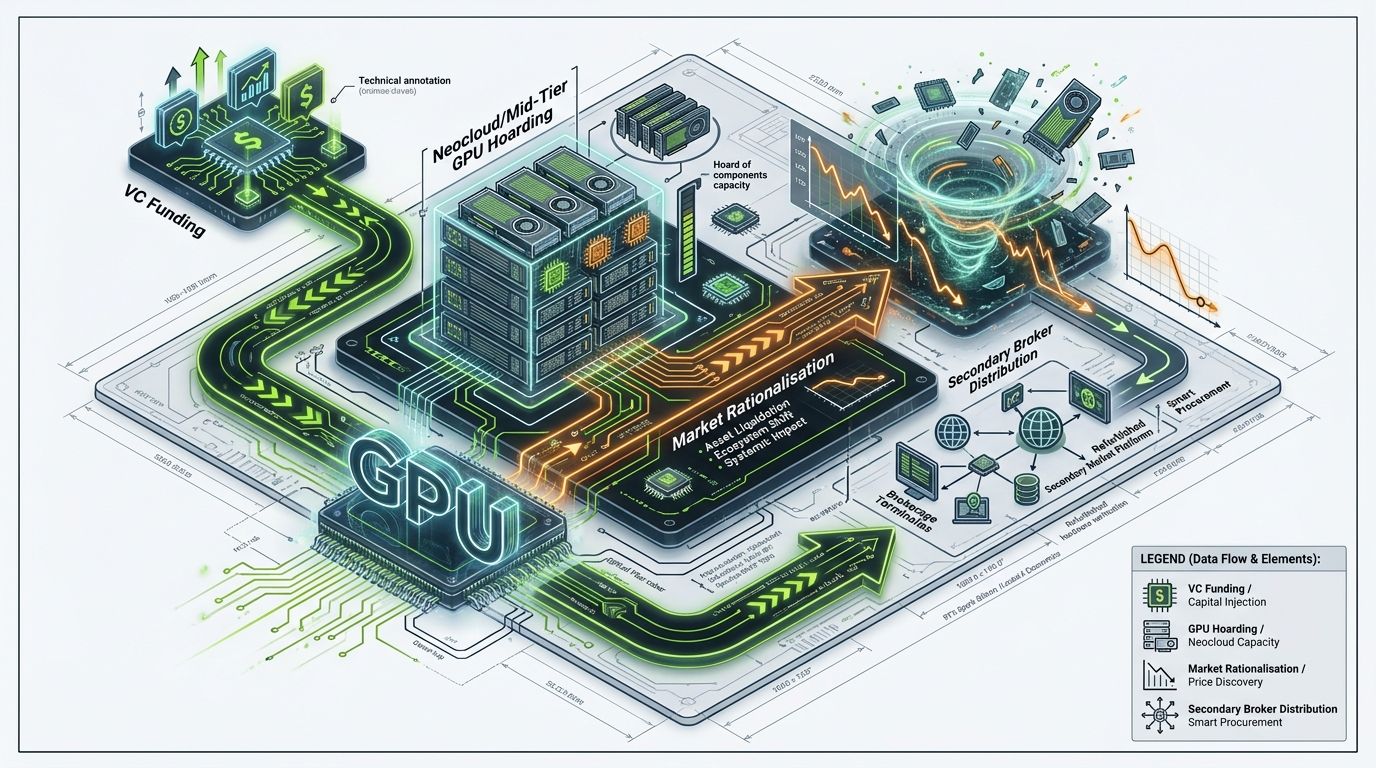
Venture-backed companies acquired large compute footprints at peak valuations. Market corrections are now driving hardware redistribution across three primary channels:
- Asset Liquidation: Mid-tier developers unable to sustain bespoke pre-training cycles are offloading bare-metal physical infrastructure.
- Ecosystem Shift: Lightly used enterprise servers bypass SaaS wrappers and flow directly to specialist hardware brokers.
- Systemic Impact: Secondary liquidity reflects the operational cost pressures documented in The Economics of AI Supply Chain Regulation.
The Secondary Market Dynamics
Generational shifts create procurement opportunities outside traditional OEM lead times. Specialist IT Asset Disposition (ITAD) firms are liquidating inventories from hyperscaler refreshes across four primary dimensions:
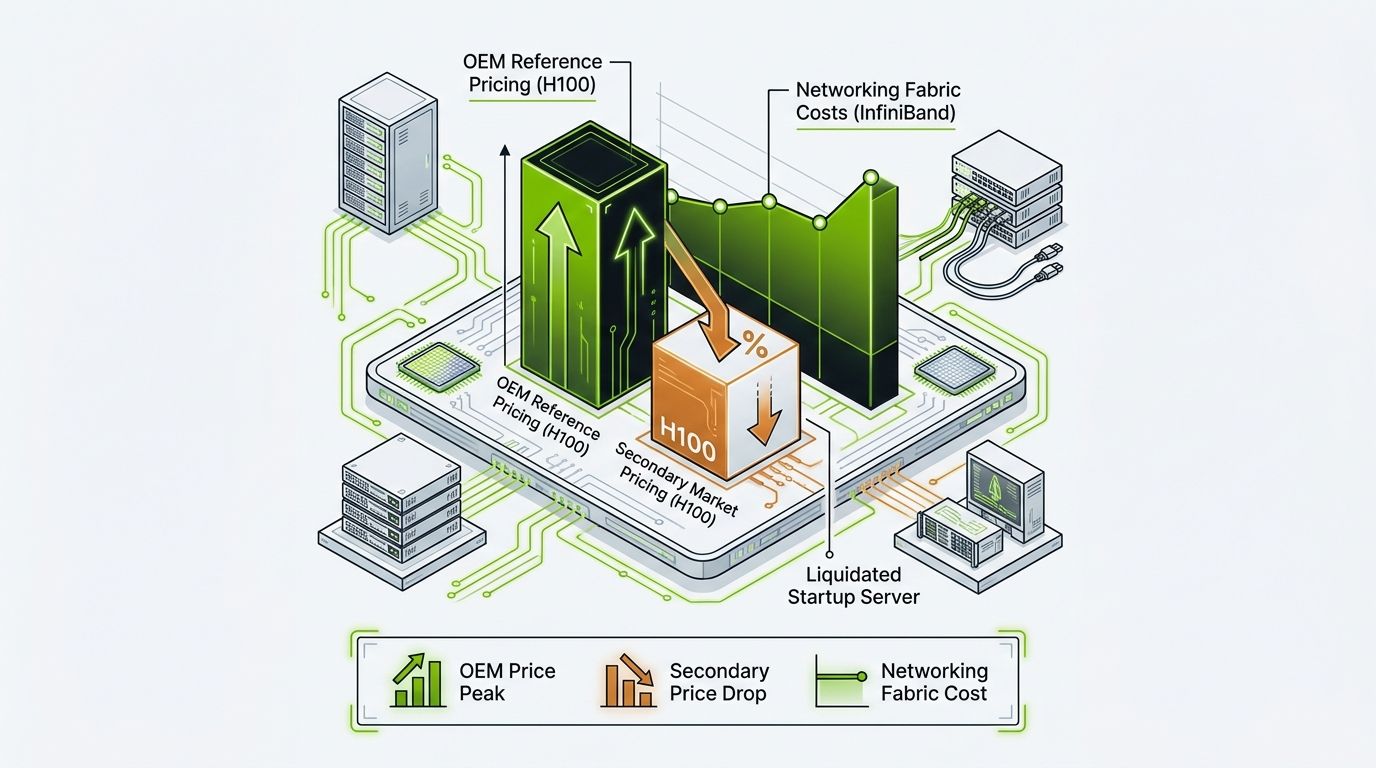
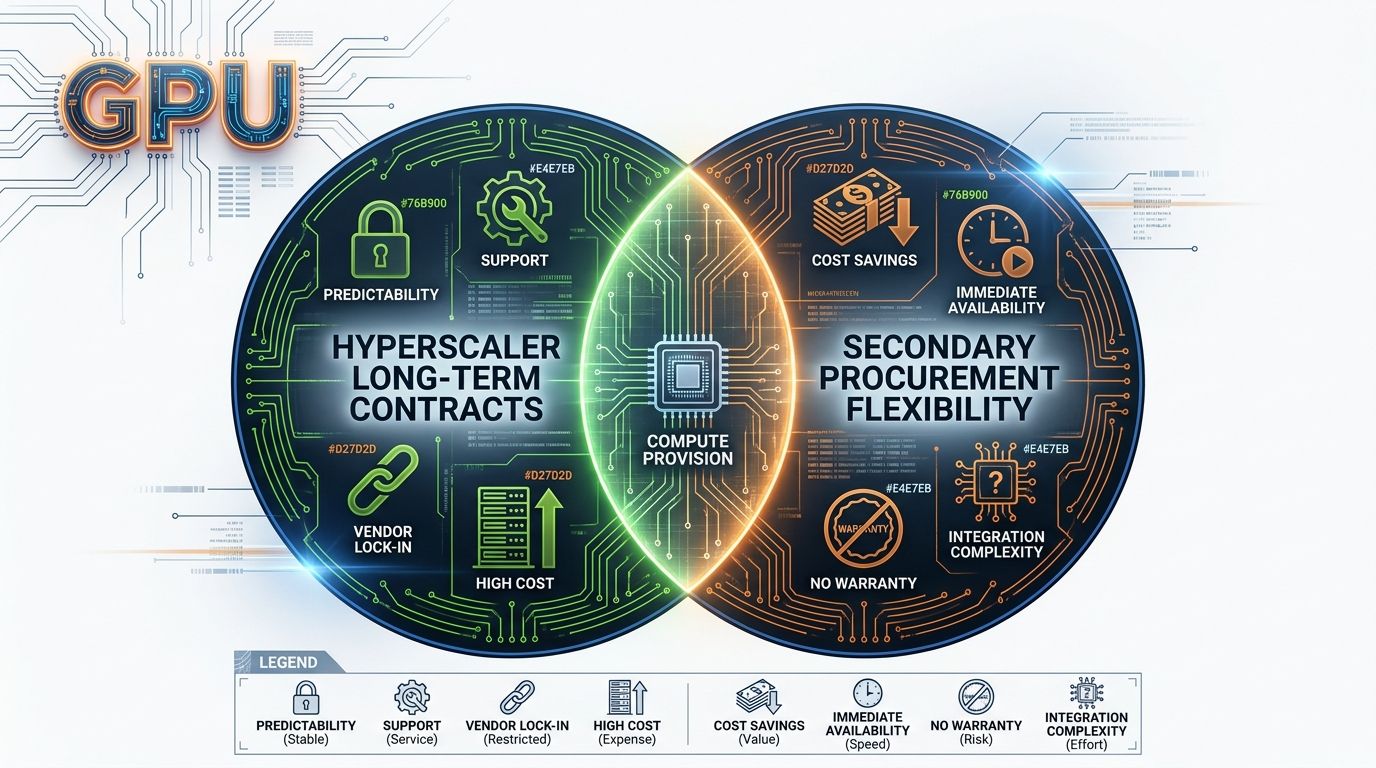
- Attractive Pricing: Secondary market prices for refurbished Nvidia H100 systems range between $18,000 and $25,000 (roughly 60% to 85% of OEM reference pricing).
- Immediate Availability: Procurement queues are eliminated, granting direct access to H100 and H200 inventories without new-build allocation delays.
- Interconnect Constraints: Discounted compute nodes still require network fabric (InfiniBand or Spectrum-X Ethernet), which maintains premium pricing and forms a capital bottleneck.
- Deployment Compression: Accessible hardware allows mid-market engineering teams to launch private fine-tuning environments rapidly.
Executing this strategy requires assessing risk across three operational areas:
- Warranty Exposure: Sourcing from secondary markets typically operates without manufacturer warranty protection.
- Silicon Degradation: Intensive training cycles introduce potential silicon stress and thermal wear.
- Integration Complexity: Combining disparate server batches creates systems integration friction for operations teams.
The De-Clouding Opportunity
Acquiring secondary hardware lowers upfront capital expenditure for private colocation racks tailored to non-frontier workloads.
- Hardware Acquisition : Discounted compute nodes enable bespoke, application-specific private racks tailored for targeted, non-frontier workloads.
- Cost Standardisation : Repatriation limits hyperscaler margins, substituting them with predictable hardware depreciation schedules and cost-optimal physical deployments SpotKube: Cost-Optimal Microservices Deployment with Cluster Autoscaling and Spot Pricing .
- Data Sovereignty : Colocated clusters deliver absolute control and regulatory compliance while integrating with cloud environments for burst capacity.
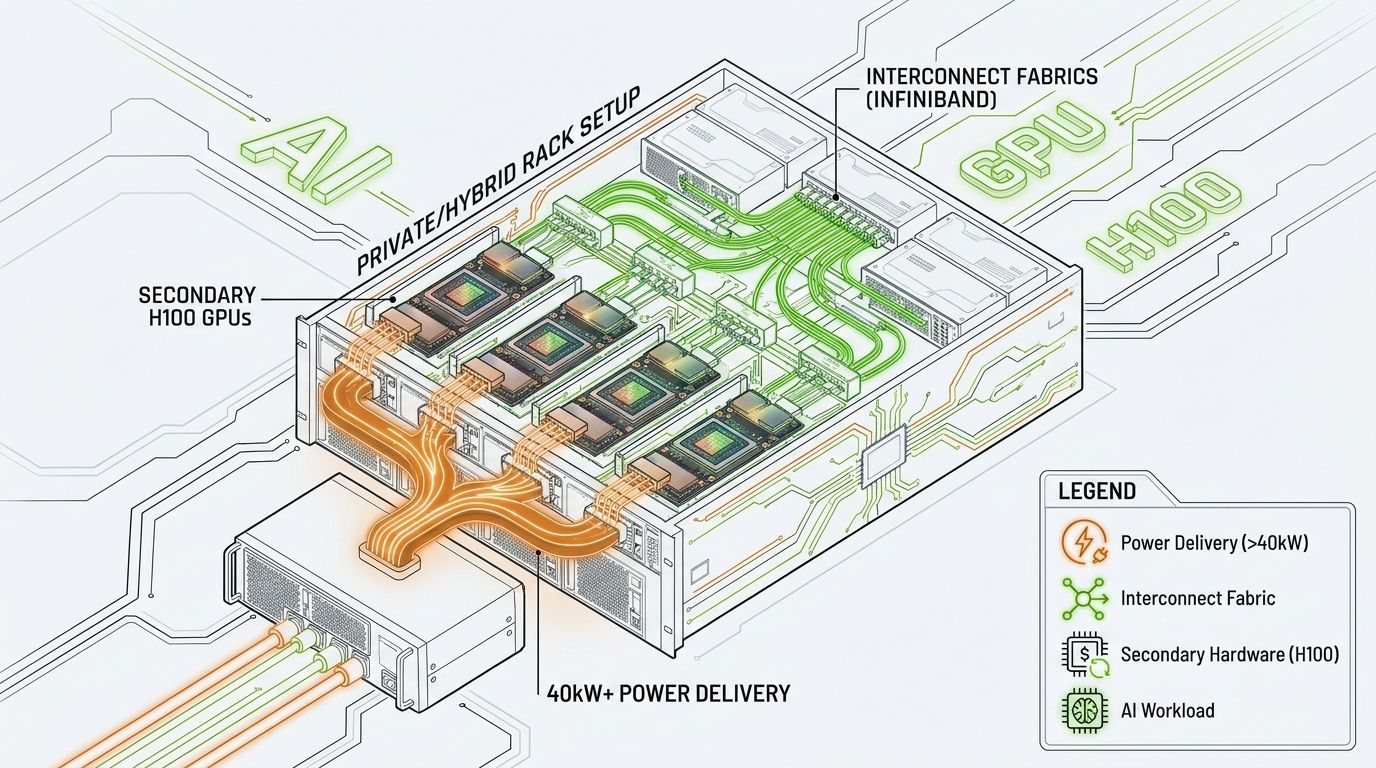
Capital arbitrage on discounted GPUs collapses if engineering teams fail to account for the severe global data centre power shortage across three infrastructural barriers:
- Power Density Limits : An 8x H100 server setup demands high-density racks exceeding 40kW+ power delivery capabilities.
- Cooling Prerequisites : Sustained GPU operations require intense liquid cooling deployments.
- Colocation Delays : Securing specialised colocation space dictates multi-year wait times or extortionate premium rates, neutralising CapEx savings when retrofitting legacy sites.
Cloud Providers' Position and Pricing Dynamics
The normalisation of secondary hardware exerts tangible gravitational pull on hyperscaler margins. Major cloud providers sustain their core revenue through long-term enterprise contracts, but the broader compute ecosystem forces adjustments across three market segments:
- Spot Market Softening : Spot pricing provides market-driven variability, but expanding secondary availability forces downward pressure on spot instance costs Spot Pricing in the Cloud Ecosystem: A Comparative Investigation .
- Commitment Enforcement : Incumbent providers are strictly enforcing existing commits and expanding hybrid product suites to prevent full-stack infrastructure de-clouding.
- Neocloud Capitulation : Debt-financed emerging cloud fleets that secured GPUs at peak prices face refinancing crises as supply saturates and secondary markets capture mid-market inference customers.
Conclusion & Strategic Advice
The combination of mid-tier model rationalisation and generational GPU transitions creates a rare arbitrage opportunity. By integrating secondary hardware for baseline inference and reserving premium cloud compute for burst workloads, engineering teams can drastically lower operational costs.
Key Evaluation Metrics
- Hardware & Networking: Balance upfront H100 discounts against performance-per-watt depreciation and premium InfiniBand interconnect costs.
- Facilities & OpEx: Account for the sustained cost of 40kW+ high-density colocation.
- Risk & Lifecycle: Weigh amortised savings against stranded-power barriers and warranty-less hardware risks.
The next instalment, Broker Networks & ITAD Playbook , provides the operational blueprint for sourcing, verifying, and transacting enterprise GPU inventory.
This generational transition offers a rare window to build sovereign, hybrid AI infrastructure without prohibitive technical debt. 💬 Will your infrastructure team capitalize on the secondary GPU market or stick with the cloud? Share your insights below and ♻️ repost this with your network!
Further Reading
- Navigating the High Cost of AI Compute
- The Economics of Generative AI and Cloud Repatriation
- AWS EC2 Spot Instances for Machine Learning
More From Me
Original Article: Read on LinkedIn | Read on Substack