AI is the Rat: The Surge in Automated Vulnerability Exploitation
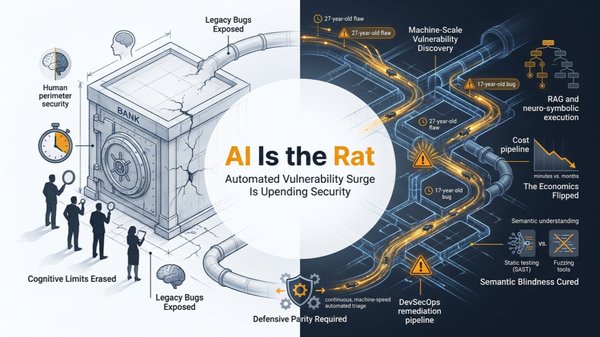
- Why Machine-Scale Vulnerability Discovery Disrupts Human Security Architecture
Introduction
Historically, security perimeters were engineered around human-scale parameters of perception, fatigue, and physical limits. Artificial intelligence fundamentally bypasses these boundaries through the deployment of Agentic Scaffolding, using autonomous, iterative execution loops to traverse codebases relentlessly.
Defending against machine-speed exploration requires adapting to three operational realities:
- Non-Human Threat Vectors : Utilising Retrieval-Augmented Generation (RAG) and neuro-symbolic execution maps cross-repository logic far beyond human working memory limits, surfacing microscopic openings that traditional defences overlook.
- Mechanics Comprehension : Architecting defence demands precise modelling of how these non-human threat vectors execute hyper-complex sequences.
- Defensive Parity : Achieving equilibrium requires a transition from manual triage to automated, machine-scale remediation pipelines that close logic gaps before exploitation.
1. The Bank of England Vault Metaphor
When evaluating assumed architectural boundaries, the primary vulnerability emerges when intruders bypass rules engineered for human-scale parameters. Historical and modern breach data demonstrate two critical examples of dimensional failures:
- The Bank of England Vault (1836) : A Victorian sewer worker accessed the Threadneedle Street gold vault through a sub-floorboard drain (Bank of England Museum Archives, 1836). The system was fortified against conventional force, failing against an entity exploiting non-standard dimensions.
- The Assam ATM Breach (2018) : Rodents entered a secure casing through a tiny wire access hole, shredding ₹1.2 million (Reuters, 2018).
Security models engineered exclusively around human-sized interactions leave vast, unmonitored openings for non-human threat vectors.
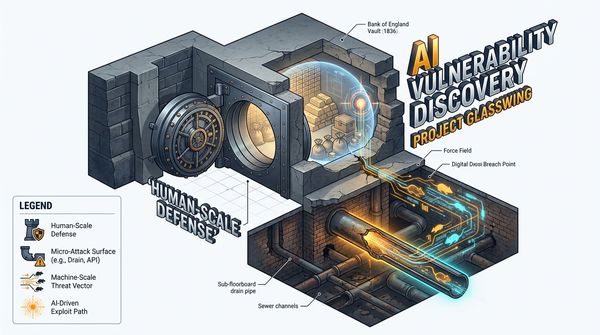
Visual Suggestion : Bank of England drain vault vs non-human attack surface graphic
2. AI as the Non-Human Intruder
Artificial intelligence gives modern vulnerability discovery three critical, non-human operational advantages by separating the cognitive engine from the autonomous execution loop. This decoupling fundamentally shifts how code evaluation executes:
- Perception Mechanics : Human auditors are constrained by working memory limits ( Miller's Law of 7±2 items) and foveal bias. AI agents utilise Retrieval-Augmented Generation (RAG) and neuro-symbolic execution to map complex, cross-repository logic and systematically eliminate intuitive bias.
- Physiological Elimination : Agents execute with zero cognitive fatigue. They mathematically process every code block without dangerous operational assumptions, such as skipping logic under the premise that an expert "must have tested this line."
- Compute Economics : The resource expenditure of running millions of blind fuzzing iterations is eclipsed by targeted, LLM -driven semantic code audits.
Autonomous parallelised exploration compresses months of manual auditing into minutes of processing time. This economic shift requires an immediate change in our defensive posture, as the exact capabilities that democratise deep codebase auditing for defenders are reducing the cost of zero-day discovery to near-zero for hostile threat actors.
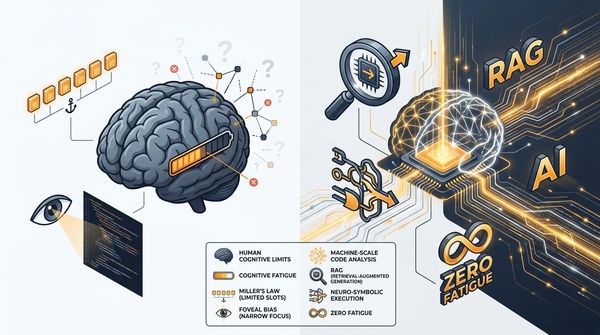
3. Decades-Old Flaws Surfaced in Minutes
Machine-scale auditing forces a recalculation of legacy code confidence. Frontier models embedded within autonomous agentic scaffolding systematically process historical codebases to identify four significant categories of zero-day vulnerabilities that bypassed decades of human auditing:
- Core Protocol Flaws : Anthropic's autonomous scanning tools, Project Glasswing and Project Mythos, surfaced thousands of high-severity findings across internet protocols The Hacker News .
- Memory Vulnerabilities : Agentic systems identified a 27-year-old memory flaw in OpenBSD , an operating system previously validated by rigorous manual code reviews Cybersecurity News .
- Unauthenticated Execution : Machine analysis extracted a 17-year-old unauthenticated remote code execution (RCE) bug in the FreeBSD Network File System (NFS) .
- Legacy Kernel and Media Bugs : Automated logic audits isolated legacy flaws in the Linux Kernel dating back to 2003 and a 16-year-old FFmpeg out-of-bounds write vulnerability that bypassed millions of blind fuzzing iterations.
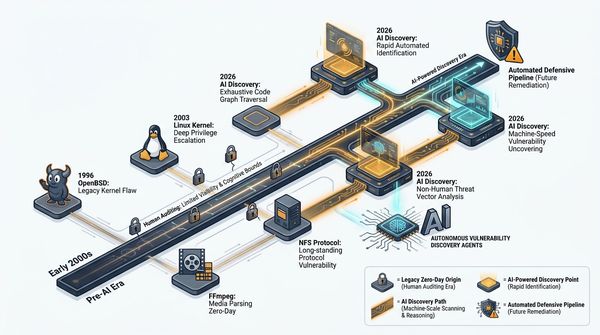
4. Why Traditional Defence Misses Rat-Sized Openings
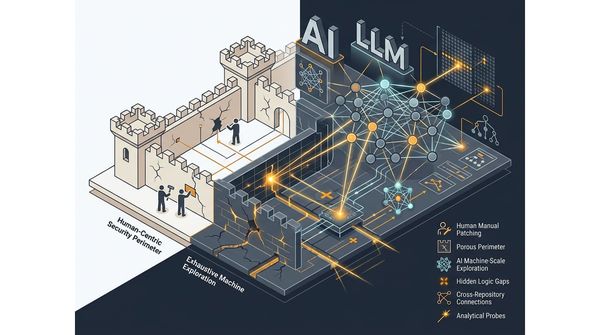
From a systems-design perspective, traditional DevSecOps pipelines and static application security testing (SAST) tools are optimised to detect predictable human errors like cross-site scripting (XSS) or routine buffer overflows . The primary challenge is that these tools do not model non-human attackers capable of autonomously parsing vast code context windows.
Effective detection requires understanding two distinct operational limitations:
- Semantic Blindness : Traditional fuzzers induce program crashes through randomised input permutations. They miss subtle logic anomalies because they don't fully understand the developer's intent.
- Cross-Repository Execution : Machine-scale attackers correlate distant logic across repositories to execute hyper-complex race condition sequences requiring precise, non-human timing orchestration.
Agentic pipelines powered by LLMs unify semantic analysis with structural execution logic. This infrastructure evaluates execution paths mathematically, eliminating the human tendency to dismiss edge-case conditions as unrealistic.
5. The Practical Takeaway for Security Architecture
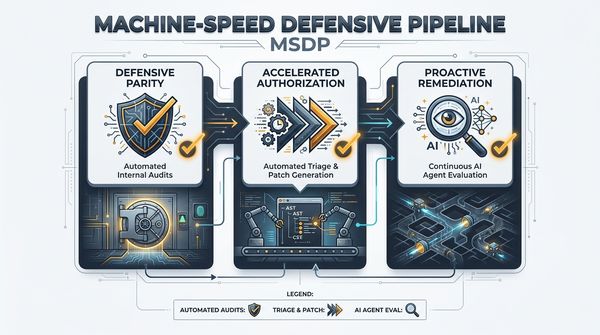
Architectures must transition to exhaustive edge modelling, operating on the assumption that non-human threat vectors systematically evaluate every logic contradiction. The democratisation of offensive AI forces a recalculation of survival metrics, demanding three immediate structural updates:
- Defensive Parity : Reaching equilibrium requires matching machine-speed discovery rates with automated, internal audits.
- Accelerated Authorisation : Human-in-the-loop patch workflows mandate integration with automated triage and machine-speed patch generation pipelines.
- Proactive Remediation : Dedicated defensive AI agents execute continuous codebase evaluations to isolate and remediate logic paths before offensive processing occurs.
Implementing these systems transitions security teams from reactive patching cycles to continuous, machine-speed verification.
Conclusion & Strategic Advice
The integration of LLM comprehension with agentic structural code analysis permanently alters the vulnerability discovery lifecycle. Traditional perimeter architectures leave microscopic but highly critical logic gaps exposed.
Bridging this operational divide requires shifting technical strategy from human-paced weekly patches to three real-time, automated triage models:
Selection Matrix for Machine-Scale Defences
- Legacy Repositories : Deploy Autonomous Semantic Auditing and Agentic Code Comprehension Pipelines to map undocumented control flow systematically and align semantic intent with logic execution.
- Active CI/CD Pipelines : Implement machine-speed patch generation to streamline rapid human-in-the-loop authorisation workflows.
- Critical Infrastructure : Transition to exhaustive edge modelling utilising autonomous defensive agents.
The inherent dual-use nature of these tools dictates that the exact capabilities empowering offensive zero-day discovery execute internally for relentless auditing. Architect systems under the mathematical reality that a persistent, non-human entity is actively probing them right now, requiring immediate adaptation of DevSecOps pipelines to process machine-speed vulnerability discovery.
💬 Is your DevSecOps pipeline prepared to counter machine-speed vulnerability discovery? Drop your thoughts below and ♻️ share this post to alert your security network!
Further Reading
Expand your technical implementation strategy with these three core research architectures:
- LLM Agents : ChainFuzzer: Greybox Fuzzing for Workflow-Level Multi-Tool Vulnerabilities in LLM Agents
- Automated Patching : All You Need Is A Fuzzing Brain: An LLM-Powered System for Automated Vulnerability Detection and Patching
- Code Vulnerability : LLMs in Code Vulnerability Analysis: A Proof of Concept
More From Me
Review these ten analyses for a deeper understanding of machine-scale threat modelling and agentic operations:
- Threat Landscape : The 2026 AI Threat Landscape: Machine-Speed Autonomous Agents
- Offensive AI : The Claude Mythos: Project Glasswing and the Rise of Autonomous Offensive AI
- Cybercrime Vectors : AI Agents and Cybercrime: How 'Manus' Could Reshape Criminal Activity Online
- Cyber Evaluation : The Kobayashi Maru of AI Cyber Evaluation
- System Security : Model Context Protocol: Securing AI Systems Against Cybercrime and Warfare
Original Article: Read on LinkedIn | Read on Substack