Evaluating AI APIs in 2026: Prioritising Functional Constraints and Abilities

Introduction
From a design perspective, the choice of Artificial Intelligence APIs in 2026 requires a shift from brand loyalty to an evaluation of functional constraints. The expanding capabilities of AI models and the increasing choice of models and providers are creating a space where maintaining your edge requires a discerning approach to selecting the right API to remain competitive and drive innovation.
This guide provides a pragmatic roadmap for assessing and deploying AI APIs:
-
Moving beyond theoretical discussions to offer actionable insights.
-
A clear framework for selecting the optimal AI API.
-
It matches project requirements with the right technologies to deliver reliable, efficient, and secure results.
Complexity and Agentic Workflows
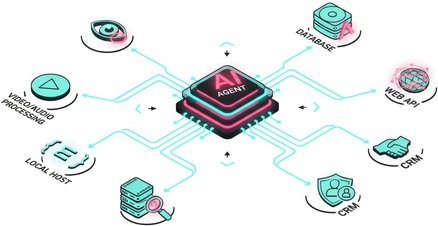
For initiatives that require autonomous tool use, complex reasoning, or highly nuanced content, OpenAI and Anthropic Claude provide strong solutions. These platforms manage sophisticated prompts and produce refined outputs.
Consider these platforms for developing advanced AI agents capable of independent interaction with diverse tools and APIs:
-
OpenAI, a market leader, provides polished SDKs and strong agentic capabilities. Examples include autonomous coding agents that review repositories and implement features using the OpenAI API.
-
Anthropic Claude, featuring "Constitutional AI," emphasises nuanced prose and safety. This makes it ideal for drafting extensive, balanced policy reports, Anthropic Claude Pricing.
Heavy Media and Extended Context Processing
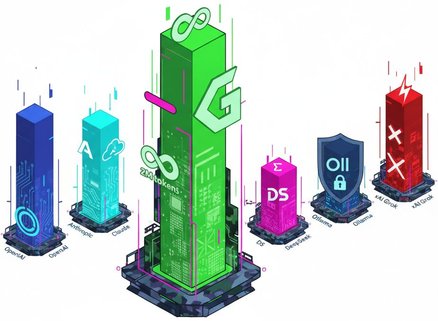
Applications that require extensive processing of multimodal data, such as video, audio, or large-scale text datasets, are best served by Google Gemini. Gemini's native multimodal capabilities enable efficient ingestion of diverse data types.
Google Gemini is a powerful asset for media-intensive projects and deep data analysis where understanding broad context is critical:
-
With upto a 2M token context window is particularly advantageous for comprehensive analysis.
-
This includes transcribing lengthy earnings calls with precise timestamps or summarising extensive documents from the Google Gemini API Pricing.
Budget-Conscious Technical Applications
When cost-efficiency is a priority for math-intensive or high-volume coding tasks, DeepSeek and other Chinese providers offer highly competitive alternatives. These APIs typically feature economical pricing structures while delivering strong performance for technical computations and code generation.
For scenarios demanding a high volume of requests or development environments where operational cost minimisation is crucial without compromising accuracy or speed for specialised technical workloads, DeepSeek is a strong option:
-
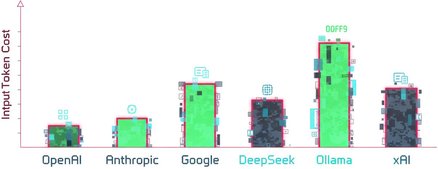
DeepSeek V3.2 is priced significantly lower than its Western counterparts.
-
This makes it suitable for competitive programming and mathematical workloads (DeepSeek API Docs).
Privacy and Local Control
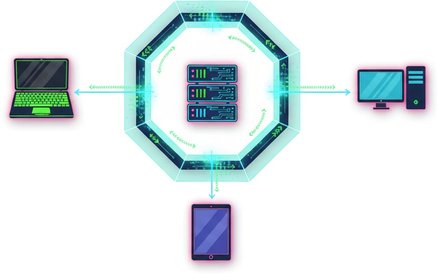
To address paramount privacy concerns and maintain granular control over sensitive data, deploying models locally with Ollama is an effective strategy. This approach mitigates the inherent risks of transmitting confidential information to cloud providers by providing a secure on-premises environment.
Ollama facilitates the self-hosting of various open-weight large language models:
-
It provides an OpenAI-compatible endpoint.
-
This ensures data residency and compliance with strict data governance policies, which is invaluable for organisations in highly regulated sectors. Ollama Official Setup Guide.
Unfiltered Research and Reasoning
For research endeavours that demand direct, unfiltered reasoning, particularly on sensitive or controversial subjects, xAI Grok offers a distinct advantage. Grok is engineered to deliver more candid, less-censored responses than mainstream AI models, making it an invaluable tool for researchers and analysts.
This characteristic allows for the exploration of a broader spectrum of perspectives and the acquisition of unvarnished insights:
-
It is especially useful when dealing with topics where other models might default to cautious or politically neutral stances.
-
Grok 4.1 Fast offers competitive pricing for such critical research xAI Models and Pricing.


Conclusion
The strategic selection of AI APIs in 2026 requires direct evaluation of functional constraints rather than brand loyalty.
Key takeaways when evaluating AI APIs:
-
For complex agentic workflows, OpenAI and Anthropic Claude provide reliable multi-step reasoning and tool orchestration.
-
Google Gemini excels at processing multimodal datasets and large document corpora due to its 2M token context window.
-
DeepSeek and open-weight models offer strong cost efficiency for high-volume technical tasks and code generation.
-
For strict data sovereignty and local governance, self-hosting via Ollama ensures data residency.
-
xAI Grok provides unconstrained responses for specialized research.
The market continues its rapid evolution, necessitating continuous verification of pricing and capabilities on official documentation pages. Balancing the convenience of cloud APIs against the imperative of data security and local hosting remains a critical consideration for all deployments.
Further Reading
-
Implementing Agentic AI: A Practical Guide for Technical Directors
-
Securing Your AI Deployments: Best Practices for Data Privacy and Model Control
-
Optimising AI API Costs: Strategies for Efficient Resource Allocation
More From Me
Original Article: Read on LinkedIn | Read on Substack