Sovereign Vision: Reclaiming Artistry from the Algorithmic Average
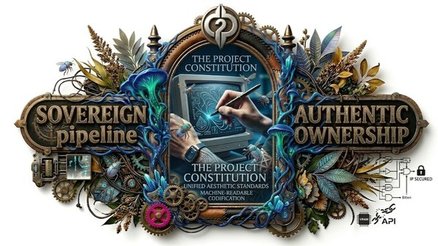
Introduction
A brilliant, creative vision means nothing if the system executing it waters down its unique style. Building on the setup methods covered in Sovereign Vision: Practical Guide to Tailored Generative AI, the real challenge isn't just making the technology work.
The real challenge is defending your unique style against generic, automated conformity. To protect your creative identity, you need to embed your personal taste directly into the structure of your system:
- Codifying Taste: Define clear, subjective rules to bypass traditional industry gatekeepers and generic algorithmic trends.
- The Frankenstein Effect: Without strict boundaries, connected AI workflows quickly clash, creating a messy mix of conflicting styles.
- The Project Constitution: Write down your creative rules in a clear, machine-readable format to protect your specific vision.
- The Exit Strategy: Move away from commercial, closed-source cloud platforms to prevent your work from becoming generic and over-sanitised.
Leaving your creative decisions to default AI settings leads directly to bland results. It is time to document, protect, and fully host your true creative intent.
Identifying the Taste Police: The Gatekeepers of Bland Design
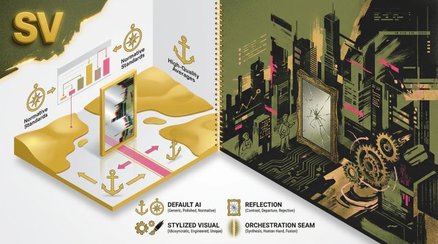
When working with generative AI tools, the main hurdle is resisting pressure from traditional cultural critics and large tech platforms. These forces tend to iron out unique design quirks and push everyone toward a safe, uniform look:
- Legacy Gatekeepers: Traditional art and design critics often dismiss AI tools as cheap shortcuts, guarding their old authority while missing the skill involved in modern curation.
- Corporate Standardisation: Commercial AI providers use techniques like Reinforcement Learning from Human Feedback (RLHF) to tweak models for broad, safe, mass-market appeal.
- Loss of Variety: This aggressive filtering cuts away the unusual, interesting edges of the data the AI learned from, leading to predictable results.
- Enforced Averages: The inevitable result is mode collapse, where standard commercial APIs scrub away the tension and eccentricity needed for standout creative work.

The Danger of Outsourcing Judgment: Escaping the Blandness
Leaving your final creative choices to default AI settings produces work that looks flawless but feels completely empty. This hyper-polished style pushes unusual visual traditions and raw expression to the margins.
From a system design perspective, true originality requires a deliberate break from standard defaults:
- Historical Examples: Impressionist painters abandoned strict realism to capture changing light, and Punk musicians traded clean audio production for raw energy.
- The Conformity Trap: If the great artists of the past had relied on commercial engines tuned to match average preferences, their distinct styles would have been smoothed out into complete conformity.
- System Engineering: Design your tech setups specifically to break away from standard model defaults instead of copying them.
The Necessity of Coherent Taste: Unifying Your Systems
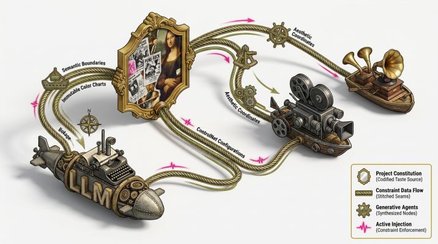
Without clear boundaries, complex multi-component AI setups degrade quickly. When separate tools run on standard commercial averages, the whole system suffers from a disjointed "Frankenstein Effect."
To fix this, you need to set up core safeguards that lock the entire system to a single, uncompromising vision:
- Component Clashes: Using large language models for text and latent diffusers for images without shared rules creates a messy, mismatched final product.
- The Project Constitution: Put your subjective styling rules into a single, machine-readable file, like .specify/memory/constitution.md.
- System Integration: Feed precise colour rules, stylistic boundaries, and specific ControlNet configurations directly into your core instructions.
Moving this guiding ruleset from a commercial API to your own hardware means dealing with the practical side of self-hosted tech stacks. Avoiding a stylistic breakdown requires reliable system automation and targeted middleware setup:
- Automation Frameworks: Use modular tools like LangChain, AutoGen, or the Model Context Protocol (MCP) to route your instructions.
- Execution Layers: Pair these frameworks with local engine runners like Ollama or vLLM to run parameters across separate, self-hosted model instances.
- Practical System Design: This structure turns your design rules from a conceptual guide into a functional, automated technical standard.
Strategies for Creative Freedom: The Self-Hosted Shift
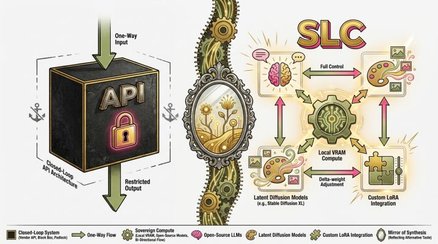
Quick text tweaks and basic negative instructions are only temporary fixes. True creative independence is impossible while relying on closed commercial APIs, where providers can alter model behavior or block your inputs without warning.
The permanent fix requires shifting to a self-hosted, open-weights infrastructure:
- The Exit Strategy: Run your tools entirely on local graphics hardware (VRAM) to separate your text instructions from your image generation.
- Text & Logic Governance: Use accessible open-source text models, like the Meta Llama 3 ecosystem, to handle system rules and logic.
- Visual Generation: Match your text tools with open image models like Stable Diffusion XL or Flux.1, running them inside modular interfaces like ComfyUI.
- Direct Model Tweaking: Local hosting allows you to apply custom low-rank adapters (LoRAs) and ControlNets directly, completely avoiding corporate content filtering.
- Hardware Accessibility: Thanks to advances in model distillation, efficient models can now run smoothly on unified memory computers, lowering the cost of entry.
Conclusion & Practical Steps
A truly independent AI setup combines your original intent as the guide, flexible system settings as the map, and self-hosted hardware as the shield. In an environment where generating content costs almost nothing, your personal taste is your only real differentiator.
By hard coding your standards into your system prompts and moving to your own hardware, you regain absolute control over your creative tools. The final step is securing and verifying your work:
- Cryptographic Signing: Sign your finished files using open C2PA cryptography standards to prove exactly how the file was made.
- Verifiable History: C2PA creates a transparent record of origin, proving that the asset came from your unique, uncompromised setup.
- Current Platform Limits: Keep one major catch in mind: while major software packages support C2PA metadata, most social networks strip this data out when you upload a file, making verification difficult on mainstream platforms.
- Production at Scale: Even with these platform limits, keeping a record of origin is vital, as outlined in Sovereign Vision: Achieved Greatness Through Personal Vision.
Create your .specify/memory/constitution.md file, and take back control of your models.
Further Reading
- Taming Mode Collapse in Score Distillation for Text-to-3D Generation
- Concept Sliders: LoRA Adaptors for Precise Control in Diffusion Models
- Content Authenticity Initiative (CAI): Implementing C2PA Pipelines
More From Me
Original Article: Read on LinkedIn | Read on Substack