Generative Engine Optimisation: Enterprise GEO With Optimizely Opal
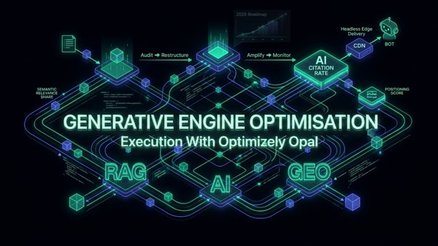
Part 3 of 3 - Automating Audits and Tracking AI Citations with Opal
Introduction
Moving to machine-readable architectures is an operational requirement. Building on the schema foundations and structural blueprints established in Part 2: The Core Constructs of GEO , this final instalment transitions from theory to execution.
Conversational synthesis layers rapidly obscure traditional search mechanisms, rendering standard performance metrics obsolete . Validating machine readability at scale and measuring brand visibility directly inside Large Language Model (LLM) responses requires an automated methodology. This guide unpacks the mechanics of executing Generative Engine Optimisation (GEO) in the enterprise by examining three key technical integrations:
- Agentic Orchestration : Automating structural validations using Optimizely Opal.
- Modern Telemetry : Tracking Retrieval-Augmented Generation (RAG) metrics to verify brand presence.
- Edge Delivery : Deploying headless edge-rendered delivery architectures for AI bot consumption.
By the end of this guide, you will be equipped to implement a self-correcting knowledge architecture that automates pre-publication audits, bypasses legacy click-through tracking, and securely deploys advanced AI citation metrics to maintain domain authority.
Agentic Orchestration: Scaling GEO Audits with Opal
Manual code and metadata validation create unsustainable bottlenecks for massive, multi-brand digital footprints. To maintain discovery across thousands of enterprise assets, you need automated testing loops built directly into pre-publication workflows.
Optimizely Opal functions as a dedicated orchestration layer with pre-built GEO Recommendation agents. These autonomous agents evaluate page content for LLM discoverability, retrievability, and semantic clarity before deployment. Chaining these agents enables platforms to execute four specific programmatic operations:
- Gap Analysis : Running systematic content gap evaluations across all publication drafts.
- Schema Validation : Executing schema compliance scans against JSON-LD payloads.
- Layout Enforcement : Validating semantic lists and definition blocks to enforce strict layout models.
- Taxonomy Injection : Loading corporate product taxonomies directly into an agent's runtime memory via specialised Skills configurations.
This taxonomy injection creates a deterministic grounding layer that prevents non-compliant schema structures during the audit phase and maintains absolute brand context.
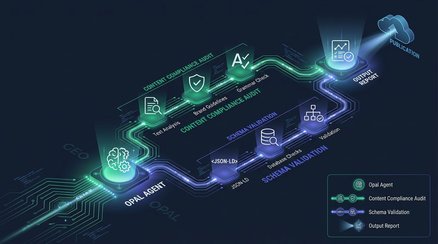
Scaling these workflows requires strict architectural governance. Running continuous multi-agent validation subflows at scale within active enterprise publishing calendars imposes token-budgeting constraints. System architects must proactively factor credit-based execution costs and API limitations into the deployment strategy. Optimizely Opal mitigates these economic constraints through two functional mechanisms:
- Response Caching : Storing standard agent responses to reduce redundant compute overhead.
- Model Routing : Routing routine schema validation to localised, smaller models before escalating complex analytical tasks to expensive foundational models .
The New Metrics: Measuring What Matters in the RAG Era
Conversational synthesis blocks intercept raw organic referral sessions, rendering metrics such as click-through rates (CTR) obsolete.
Modern telemetry measures visibility directly within RAG pipelines. This measurement is based on frameworks that map the influence of your assets on synthesised answers across large language models, as outlined in GEO: Generative Engine Optimisation . Engineers must track three critical new indicators:
- AI Citation Rate : Calculates the exact frequency your specific properties are explicitly extracted and cited within generative summaries.
- Positioning Score : Identifies where an extracted claim ranks within a synthesised output, differentiating between a primary citation and a secondary footnote.
- Semantic Relevance Share : Tracks the overall semantic authority linking your brand entities to target industry problem sets across foundational models.
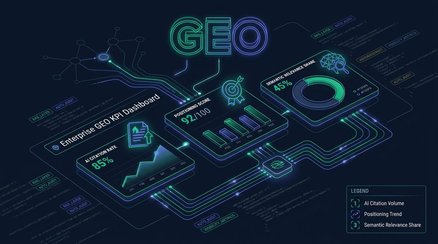
Optimizely's custom Efficiency Dashboards embed these metrics directly into the central workspace. Tracking citation metrics across closed generative engines (e.g., Apple Intelligence, private enterprise instances) requires predictive inference modelling, as direct click-stream referrers do not exist within black-box LLMs. Teams must build automated LLM prompting rigs executing two continuous functions:
- Frequency Mapping : Querying target industry terms to map the frequency of brand extraction.
- Volume Cross-Referencing : Comparing synthetic brand query volume against known LLM citation indices to measure true share-of-model-voice.
The Executive GEO Roadmap: 4 Steps to 2026 Visibility
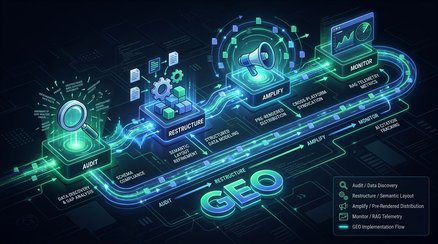
Operationalising GEO demands a structured compilation framework that mirrors a modern continuous deployment pipeline. Establishing a trusted, machine-readable knowledge source requires executing a four-step implementation strategy:
- Audit : Deploy automated orchestration tools to map structural visibility gaps and flag unstructured visual blobs that AI scrapers cannot parse.
- Restructure : Partition layouts into strict content models, enforcing clean semantic HTML and robust data formatting for external scraping bots.
- Amplify : Maximise indexing through edge-rendered delivery, ensuring the primary enterprise DXP serves pre-rendered, unbloated semantic DOMs natively via CDN . This targets user-agents identified as AI bots (e.g., GPTBot , ClaudeBot). Utilising headless edge computing nodes and direct structured data ingestion APIs guarantees low-friction ingestion without duplicating repositories or fracturing canonical authority .
- Monitor : Connect technical structure adjustments directly to conversational market share by feeding citation logs back into custom analytics dashboards to continually refine the semantic layout.
Conclusion & Strategic Advice
Bringing schema validation, automated agentic workflows, and RAG telemetry together in a single system is key to success in the synthetic search era. To maintain continuous performance, engineering teams must focus on three operational priorities:
- Automated Validation : Optimizely Opal's automation resolves the bottleneck of manual QA .
- Feedback Loops : Using AI Citation Rates and positioning scores gives you the exact telemetry you need to refine data formatting continually.
- Architectural Governance : Prioritise a headless, edge-rendered delivery architecture during the "Amplify" phase, and strictly govern token budgets when deploying continuous agentic validation workflows.
The Wrap-Up: Across this three-part series, the overarching thesis remains clear. To achieve future digital dominance, we need pristine, machine-readable data structures to govern visibility. Organisations that restructure their content ecosystems for AI ingestion today will be in a strong position tomorrow.
💬 How is your operations team tracking brand visibility across conversational engines this year? Are you building custom RAG dashboards, or relying on platform-native tools like Opal? Drop your thoughts below and ♻️ share this post with your network!
Further Reading
- Structural Feature Engineering for Generative Engine Optimization: How Content Structure Shapes Citation Behavior
- Ragas: Automated Evaluation of Retrieval Augmented Generation
- Engineering the RAG Stack: A Comprehensive Review of the Architecture and Trust Frameworks for Retrieval-Augmented Generation Systems
More From Me
Original Article: Read on LinkedIn | Read on Substack