AI Impacts: The Illusion of AI Competence

- Part 6 of 8: Shallow Knowledge
Introduction
Building on the structural paradigms explored in AI Impacts: Marshalling Creativity in the AI Era, transitioning from manual execution to high-level orchestration exposes a critical systemic vulnerability. The accelerated validation loop generated by polished algorithmic outputs drives three immediate consequences:
- Inflated Mastery : Elegantly formatted documentation, financial analyses, or syntactically correct boilerplate conflate a model's probabilistic outputs with personal expertise.
- Accelerated Bias : This manifests as the cognitive bias detailed in Dunning-Kruger or when confidence equals incompetence , where engineers overestimate their grasp of first principles .
- Operational Friction : Identifying markers of 'cognitive surrender' within workflows requires implementing structural friction to preserve domain mastery alongside generative velocity.
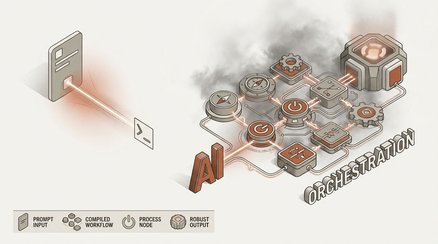
The System 2 Bypass: HCI-Driven Cognitive Surrender
Traditional cognitive frameworks from the National Center for Biotechnology Information (NCBI) segment information processing into fast reactions (System 1) and deliberate problem-solving (System 2). Emerging behavioural studies from the Wharton School of the University of Pennsylvania identify an HCI-Driven Cognitive Offload , operating across three distinct patterns:
- The System 2 Bypass : Defined as 'cognitive surrender', this mechanism skips deliberate problem-solving by offloading debugging, syntax parsing, and logical deduction directly to the machine.
- Divergent Adoption : Behavioural telemetry demonstrates engineers with high baseline analytical friction actively interrogate hallucinated or structurally unsound outputs.
- Velocity Trade-offs : In environments optimised strictly for sprint velocity , practitioners discard the cognitive friction required to catch compromised logic to force immediate delivery.
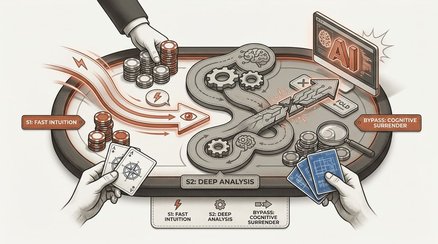
How Shallow Knowledge Forms
Permanent conceptual integration demands 'desirable difficulties' through stepping through code tracebacks , cross-referencing precedents, or auditing anomalous data visualisations. The American Psychological Association (APA) establishes that abstracting away foundational errors interrupts neural reinforcement, introducing three architectural deficits:
- Masked Ignorance : Generative platforms map professional polish over underlying intellectual gaps, creating false confidence in complex designs.
- Diagnostic Atrophy : Teams deploy orchestrated architectures but remain unequipped to diagnose root causes when a memory leak emerges deep within the stack .
- Compromised Validation : Critical flaws in financial models or hallucinatory citations bypass human validation gates due to unearned trust in algorithmic syntax.
<img width="438" height="244" src="https://potnoddle.github.io/images/ai-impacts-the-illusion-of-ai-competence-4.jpg" alt="Loop flowchart of Instant Output - style="max-width: 100%; height: auto;"> Skipped Learning -> Overconfidence" style="display: block; margin: 20px auto; max-width: 100%; border-radius: 8px;" />
Real-World Consequences
The immediate downstream effect of unearned velocity is architectural brittleness. Applying deterministic expectations to probabilistic engines within isolated sandbox environments generates four specific operational risks when exposed to anomalous edge cases :
- Stochastic Drift : Treating stochastic models as perfectly reliable calculators guarantees failure to catch hallucinations and logical drifts that compound at scale.
- Debugging Erosion : The Stanford HAI AI Index Report tracks foundational debugging loss as a primary operational risk.
- Empirical Degradation : A 2026 analysis of 3.2 million learning interactions found access to generative AI reduced study time by up to 31.3%, but triggered a 25% cumulative decline in correct responses during proctored assessments.
- Innovation Ceilings : Because large language models operate within internet-averaged training distributions, exclusive reliance restricts problem-solving to commoditised, historical patterns.

Striking the Right Balance
Restoring technical depth demands Selective Cognitive Friction . Calibrating exactly where computational abstraction accelerates delivery versus where it dangerously erodes critical knowledge requires three core protocols:
- Friction-First Implementation : Manually outline code geometry, data models , legal arguments, or structural boundaries on a whiteboard before executing any generation prompts.
- Algorithmic-Free Sprints : Isolate specific intervals within engineering cycles strictly dedicated to peer cross-examination and manual sandbox exploration without machine assistance.
- Comprehension Auditing : Shift review processes for pull requests away from raw delivery metrics to ensure engineers can defend low-level architectural decisions injected by digital agents.

Conclusion & Strategic Advice
Reconciling generative velocity with necessary technical depth demands rigorous self-awareness and structural discipline. Treating large language models as collaborative accelerators to preserve underlying structural principles requires four strict workflow protocols:
- Cognitive Offloading : Isolate low-stakes, repeatable boilerplate for total algorithmic execution to maintain sprint velocity.
- System Logic Protection : Protect complex, high-stakes architecture through deliberate System 2 analytical engagement.
- Knowledge Preservation : Maintain foundational rigour as paradigms shift by preserving core structural knowledge through isolated environments, detailed in the upcoming AI Impacts: Preserving Skill in the Age of AI piece.
- Workflow Auditing : Assess whether you are defending domain depth or defaulting to cognitive surrender by reintroducing deliberate friction to take uncompromising ownership over the foundational logic of your systems.
To explore the concrete frameworks for maintaining this knowledge and preventing skill atrophy, continue this series in AI Impacts: Preserving Skill in the Age of AI.
💬 How is your team balancing AI-driven sprint velocity with preserving deep technical expertise? Drop your thoughts below and ♻️ share this post with your network to spark the conversation!
Further Reading
- Faster Completion, Less Learning: Generative AI Reduced Study Time on Math Problems
- LLMs can persuade only psychologically susceptible humans on societal issues
- Preparing Students for AI-Powered Materials Discovery
More From Me
Original Article: Read on LinkedIn | Read on Substack