Optimizely AEO: Optimising for AI Answers, Not Blue Links
Introduction
The click-through estate is fundamentally collapsing. As generative models intercept user queries, the interaction model shifts aggressively from exploring search engine results to receiving definitive conversational answers.
Building on the operational concepts in Part 3, Generative Engine Optimisation: Enterprise GEO With Optimizely Opal , this guide establishes the architecture required to secure brand visibility in zero-click environments through three specific components:
- Answer Engine Optimisation (AEO) : Embedding core intellectual property directly into the probabilistic outputs of platforms like ChatGPT and Gemini .
- Infrastructure of Readiness : Utilising first-party platforms like Optimizely to provide log-level pickup and crawlability, extracting value at the exact moment of probabilistic LLM citation.
- Automated Gap Resolution : Executing Opal agents to classify crawler traffic via Agent Visibility Analytics and resolve competitive content gaps natively within the digital experience platform (DXP) .
GEO Was the First Step — AEO Is the Next Layer
Structural readiness, specifically semantic markup and crawler accessibility, establishes the baseline defensive perimeter. Foundational academic frameworks confirm these empirical strategies improve AI visibility via GEO: Generative Engine Optimisation .
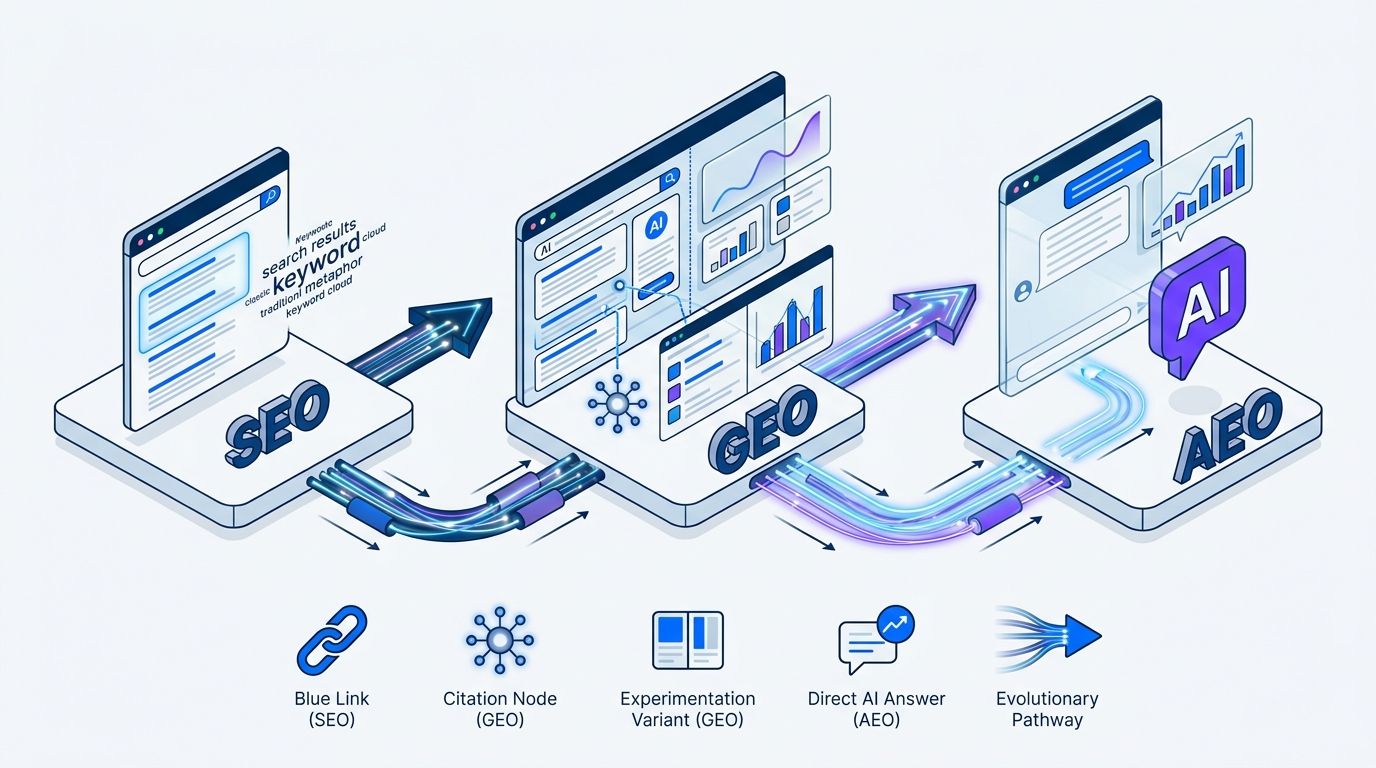
Answer Engine Optimisation evaluates whether the brand appears in the final generated conversational answer through three distinct progression phases:
- Traditional SEO : Optimising for ranking position in blue-link results pages.
- Generative Engine Optimisation (GEO) : Optimising for visibility in AI-enhanced search interfaces, such as knowledge panels and featured snippets.
- Answer Engine Optimisation (AEO) : Optimising for direct citation in zero-click conversational responses.
What AEO Actually Means: AI Answers vs AI Search
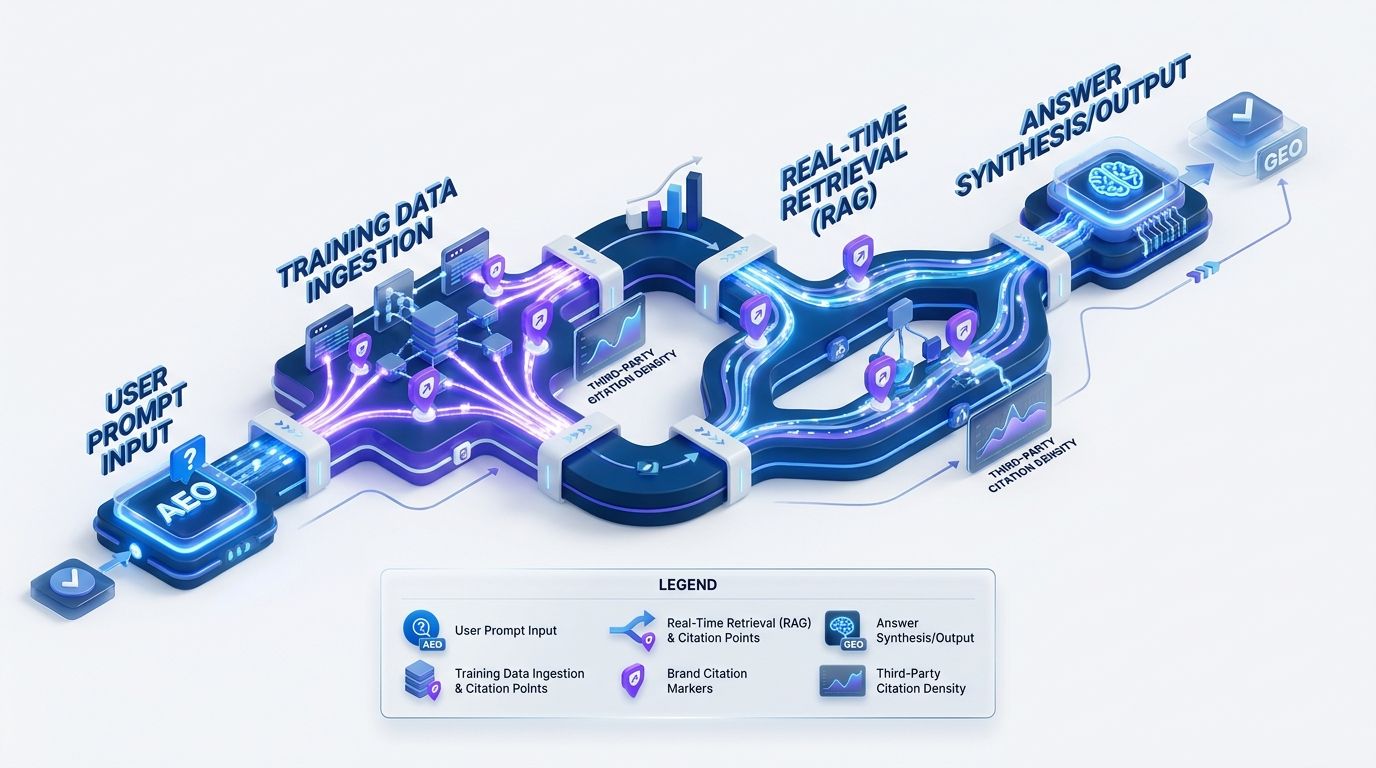
When a user prompts a model for a rigorous software evaluation matrix, the engine dynamically synthesises the response from its training weights and real-time retrieval capabilities in platforms like OpenAI ChatGPT . Traditional ranking algorithms do not govern this output.
AEO operates by targeting three primary citation mechanisms:
- Training Data Presence : Ensuring long-form, authoritative documentation is ingested during initial model training cycles.
- Real-Time Retrieval (RAG) : Formatting structured content so it is instantly parsable for retrieval-augmented generation at query time.
- Third-Party Citation Density : Securing independent references that models cross-reference to establish factual authority.
Optimizely + Conductor: What the Partnership Delivers
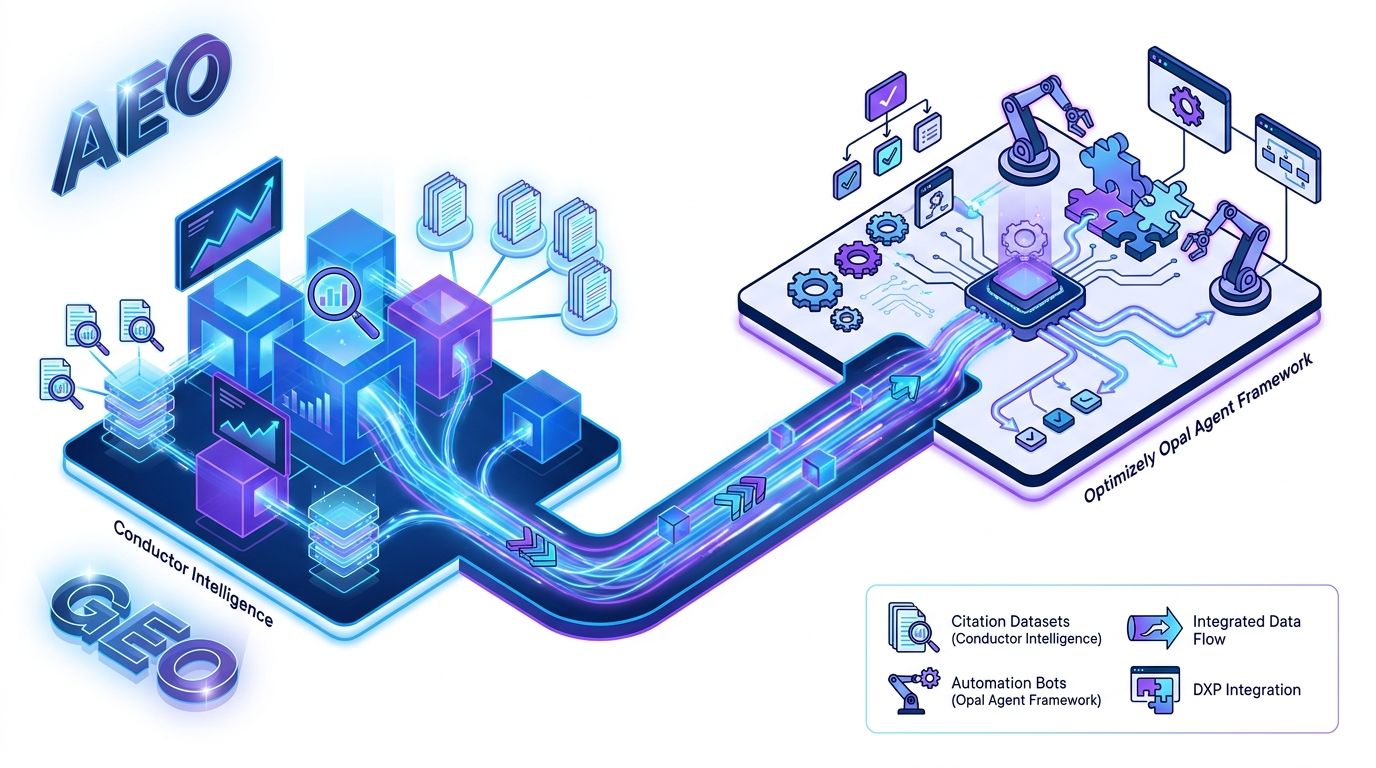
The enterprise integration of Optimizely and Conductor executed on 10 June 2026 connects intelligence analysis directly to technical execution. The system integrates Conductor's proprietary citation dataset with the Optimizely Opal agent framework to eliminate latency from tool switching.
This architecture optimises positional probability within generated answers through three structural advantages:
- Operational Focus : AEO focuses on embedding factual authority into machine-generated outputs.
- Dataset Integration : The infrastructure combines proprietary citation metrics with agent-based execution capabilities.
- Probabilistic Measurement : The framework focuses on improving positional probability within generated answers based on the June 2026 release architecture.
Agent Visibility Analytics: Seeing How AI Crawls Your Site
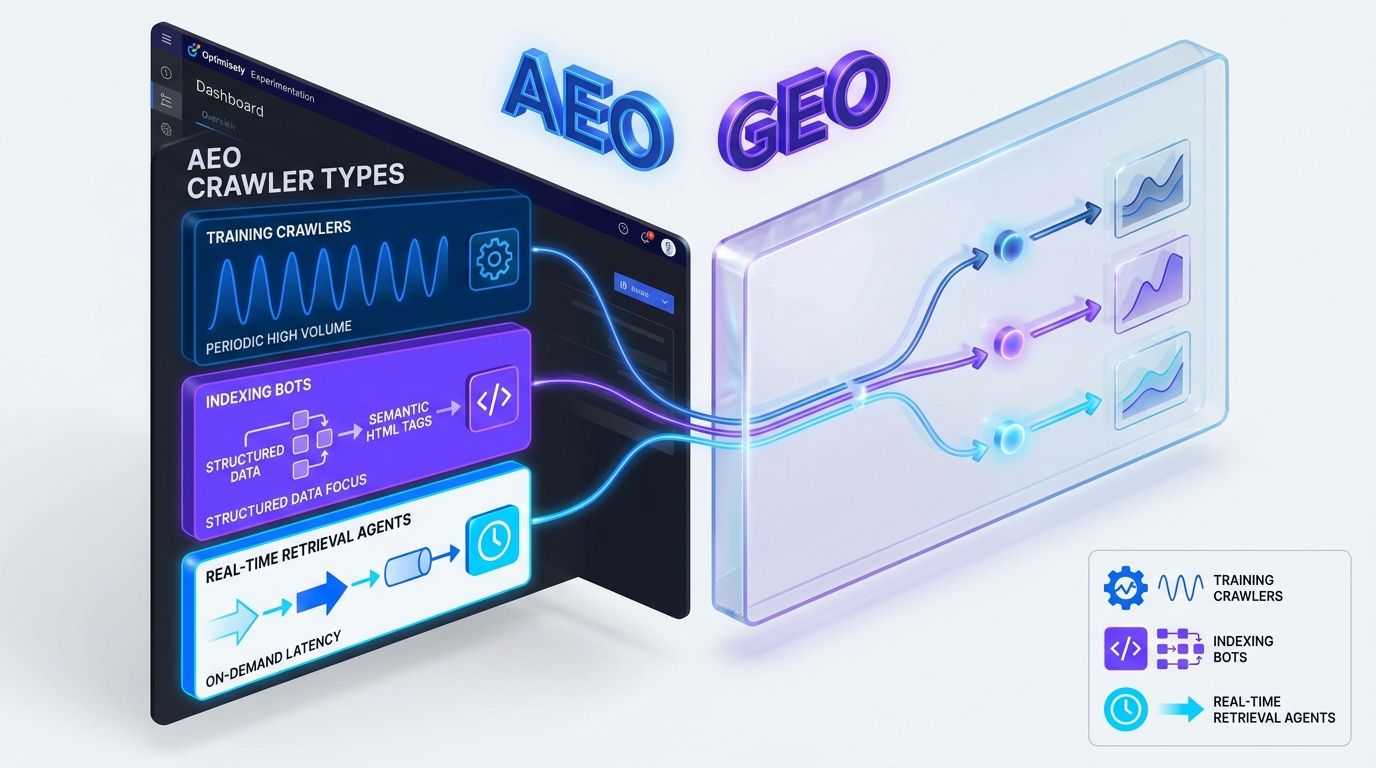
From a systems-design perspective, Agent Visibility Analytics processes log-level CDN data to identify AI crawler intent. Treating all bot traffic uniformly constitutes a technical anti-pattern .
Bots require segmentation into three categories to dictate the correct architectural response:
- Training Crawlers : These bots periodically scrape for dataset ingestion and demand original, highly crawlable, non-derivative content.
- Indexing Bots : These crawlers maintain AI-enhanced search indices and require clean, semantically valid HTML and structured schemas .
- Real-Time Retrieval Agents : Triggered on demand for user queries, these agents evaluate relevance via vector embeddings and semantic proximity. Optimising for real-time retrieval demands dense semantic formatting, clear entity relationships, and vector-friendly unstructured text alongside sub-second server latency to facilitate the ingestion of specific strings during generation.
The Conductor AEO Gap Finder Agent
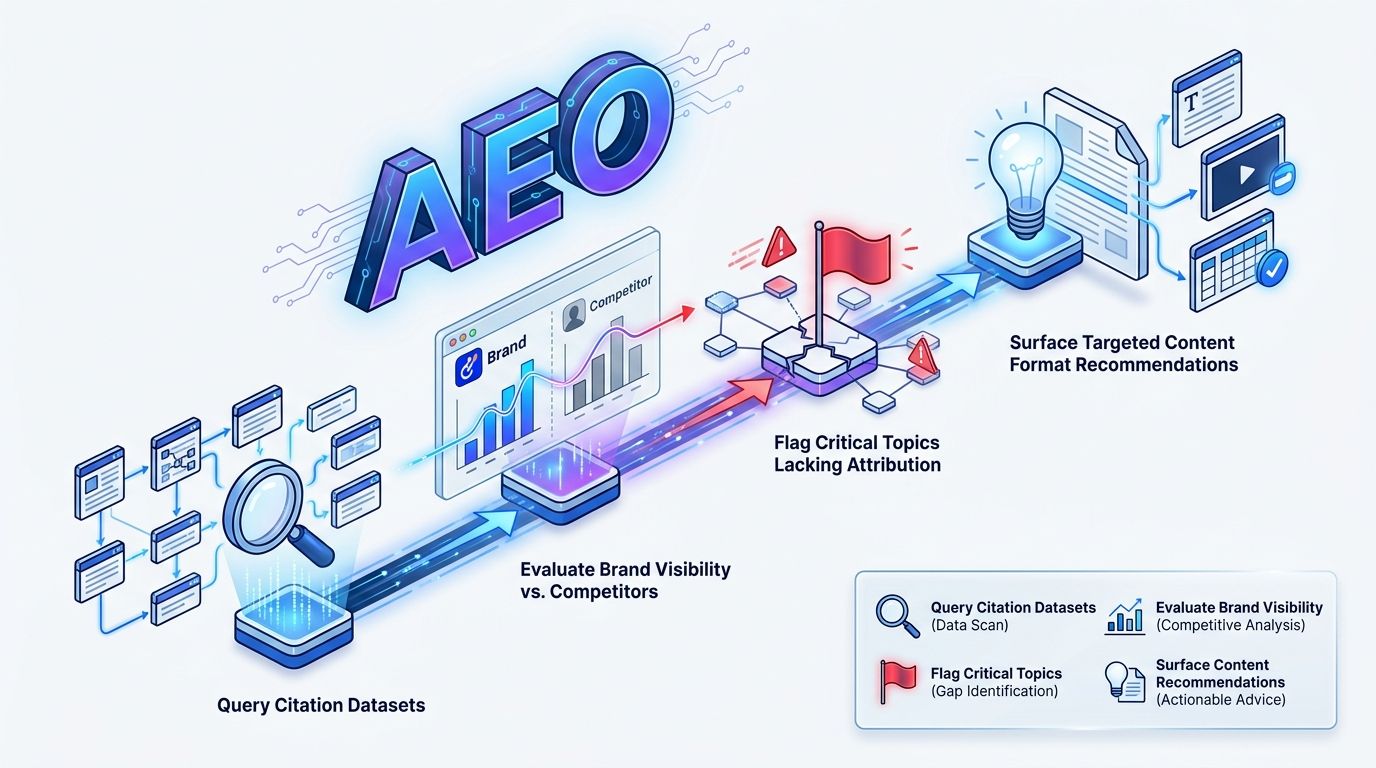
The Conductor AEO Gap Finder Agent systematically queries citation datasets to evaluate brand visibility against competitors in direct AI answers. The system flags critical topics without brand attribution and suggests priority content formats.
Effective defence against this competitive deficit requires a two-tiered operational approach:
- First-Party Content Resolution : Opal initiates inline drafting to autonomously resolve on-domain content gaps.
- Off-Site Citation Management : Conductor identifies off-domain citation gaps across platforms such as Wikipedia, Reddit, and authoritative publishers.
- Strategic Dependency Execution : Content teams must execute off-site gap resolution as an external dependency to satisfy the requirement for independent factual validation.
From Insight to Action: The Opal Integration
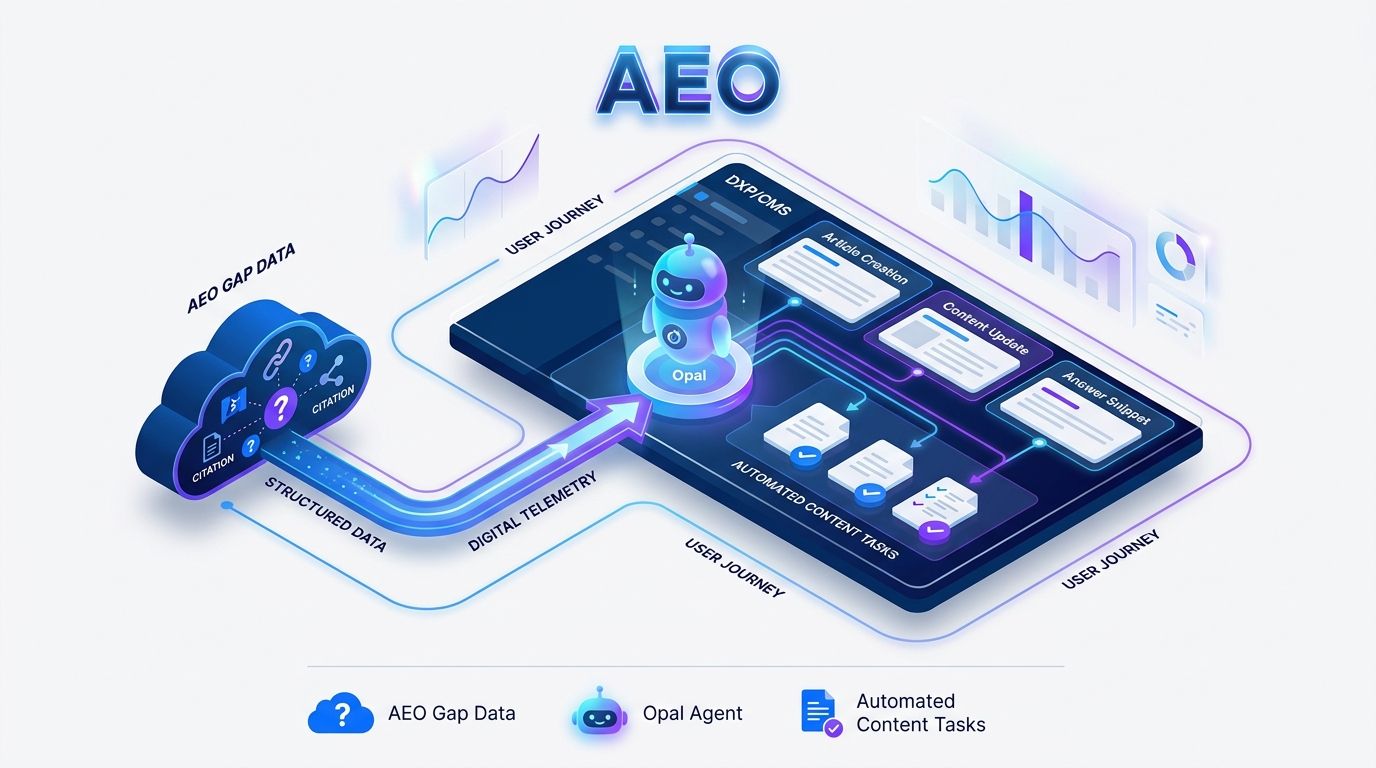
Integrated directly into the CMS , Opal processes Gap Finder data to trigger automated content tasks, replacing manual reporting workflows. The engine drafts structurally compliant briefs inline and routes them to content teams.
The system validates the execution lifecycle through three sequential operations:
- Task Automation : Opal generates briefs and assigns tasks based on quantified citation gaps.
- Publishing and Verification : Agent Visibility Analytics verifies retrieval bot pickup within days of asset deployment.
- Citation Readiness : The infrastructure confirms bot pickup to secure the technical prerequisite for probabilistic citation.
AEO as Part 4 of a GEO Strategy
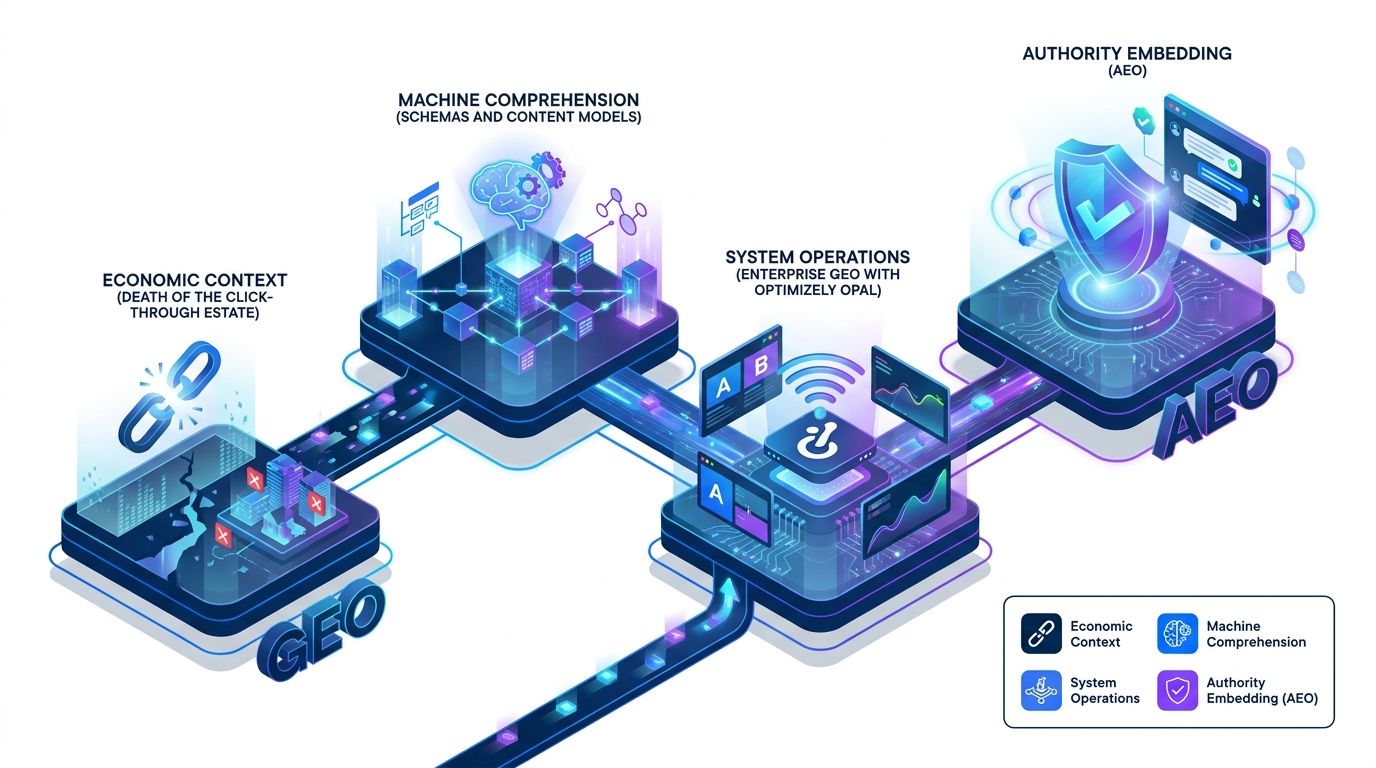
This architecture functions as the logical extension of the established search maturity curve. The preceding three stages codified the technical baseline required for structural readiness.
The complete operational strategy advances through four specific capabilities:
- Economic Context : Documenting the collapse of click-through economics in Generative Engine Optimisation: The Death of the Click-Through Estate .
- Machine Comprehension : Formatting content for crawlers in Generative Engine Optimisation: Schemas and Content Models for AI Crawlers .
- System Operations : Operating the required infrastructure in Generative Engine Optimisation: Enterprise GEO With Optimizely Opal .
- Authority Embedding : Utilising AEO to embed factual authority directly into the outcomes computed by LLMs at the point of decision.
Conclusion & Strategic Advice
Effective Answer Engine Optimisation requires aligning technical capabilities with strict crawler intent.
A strict selection matrix dictates three architectural responses based on traffic classification:
- Training Crawlers : High volumes of scraping activity require prioritising deep, proprietary data.
- Real-Time Retrieval : Dominance of retrieval agents demands optimising for latency, cache freshness, and vector-friendly semantic density.
- Citation Measurement : Systems must distinguish between "dark" citations in closed models and "attributed" links provided by platforms like Perplexity AI, measuring the latter directly while relying on sentiment proxies for the former.
This concludes our foundational strategic arc. The transition from SEO to AEO highlights a definitive operational reality: relying on the click-through estate is an obsolete strategy.
Future-proofing digital infrastructure demands two continuous operations:
- Structural Readiness : Cultivating a technical baseline for accessibility across all AI crawlers.
- Factual Authority : Establishing incontestable domain expertise at the specific point where LLMs compute real-time decisions.
💬 How is your technical architecture evolving to capture conversational citations at the exact point of LLM decision-making? Share your insights in the comments below and ♻️ repost to help your network future-proof their digital strategy!
Further Reading
- Search Engine Land: The evolution of Answer Engine Optimisation (AEO)
- Ahrefs: How LLMs and Generative AI Change Search
- Perplexity AI Publisher Documentation: Content Indexing and Citation Guidelines
More From Me
- Generative Engine Optimisation: Enterprise GEO With Optimizely Opal
- Generative Engine Optimisation: The Death of the Click-Through Estate
- Optimizely Opal: Architecting Hybrid Intelligence
- Future-Proofing Optimizely: Unlocking Optimizely with Frontend Frameworks
Original Article: Read on LinkedIn | Read on Substack